Okinawa with Kids Itinerary: A Stress-Free 5-Day Plan
Key takeaways
- Renting a car at Naha Airport is essential for stress-free travel with car seats, strollers, and beach gear.
- Base your stay in central Okinawa (Onna Village) to minimize hotel switching and keep drives under an hour.
- Pack rash guards, water shoes, and sun protection, as Okinawa’s subtropical sun is strong even on cloudy days.
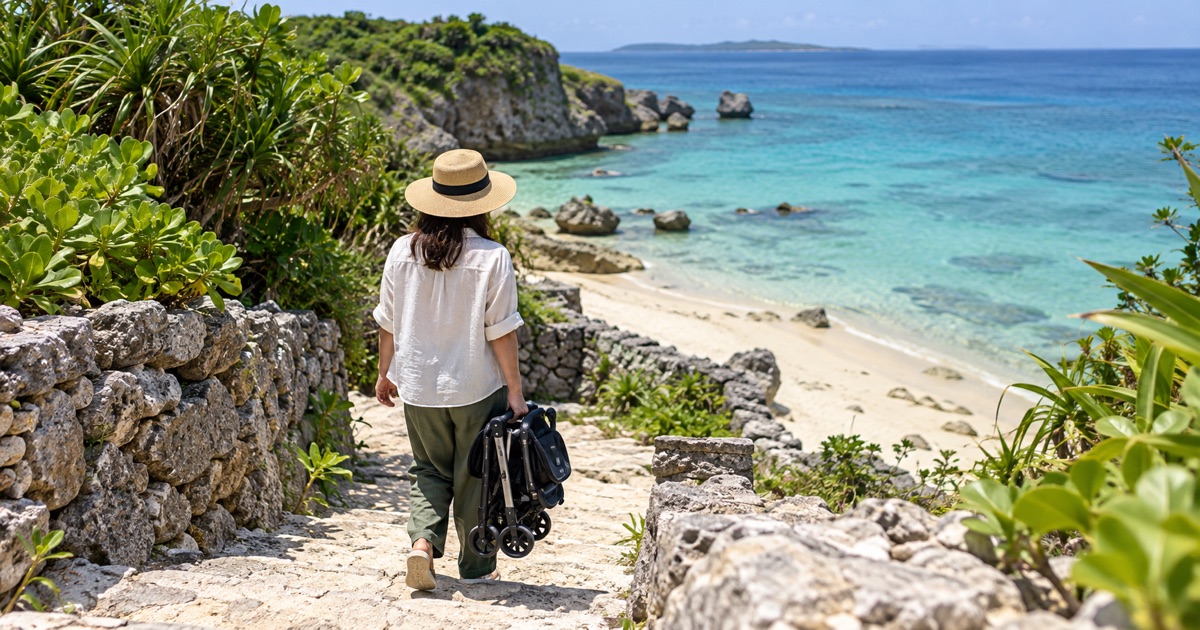
The ideal Okinawa with kids itinerary spans five days and balances gentle beach time, marine life, and culture while keeping car rides under an hour. By basing your family in central Okinawa, you avoid changing hotels repeatedly and can easily work around toddler naps, diaper changes, and stroller needs.
Okinawa offers a very different experience from mainland Japan. There are no bullet trains here, and the pace is distinctly relaxed. With shallow turquoise waters, modern roadside rest stops, and exceptionally welcoming locals, it is one of the easiest regions in Japan for a family vacation. Here is a practical, step-by-step 5-day plan designed specifically for parents travelling with young children.
Practical Basics Before You Go
Before booking flights, a few logistical decisions will make or break your trip.
Transportation: Why You Need a Rental Car
While mainland Japan relies on trains, mainland Okinawa (Okinawa Honto) requires a car if you travel outside Naha (那覇). The Yui Rail (ゆいレール) monorail serves Naha Airport and central Naha, but it does not run north to the family-friendly beach towns or attractions.
Book a rental car well in advance, specifically requesting baby or child seats, which are legally required in Japan for children under age six. Ensure you obtain an International Driving Permit (IDP) under the 1949 Geneva Convention before departing your home country, as rental agencies cannot hand over the keys without it. For general transport advice across the country, check the Japan National Tourism Organization website.
Strollers, Baby Supplies, and Packing
Okinawa is hot and humid for much of the year. Pack lightweight, quick-drying clothes, wide-brim hats, swim shirts (rash guards), and water shoes to protect small feet from sharp coral.
Most major attractions are stroller-friendly with ramps, but a lightweight, compact stroller works best. You do not need to pack weeks of diapers and baby wipes. Japanese drugstores, convenience stores, and mega-retailers like Aeon (イオン) carry diapers, formulas, and baby food. Keep in mind that Japanese baby food pouches skew heavily toward fish and vegetable broths, so bring a few familiar favourites from home if your child is a picky eater.
Day 1: Arrival in Naha and Drive to Central Okinawa
Pick up your rental car at Naha Airport (那覇空港). Rental car shuttles pick up passengers directly outside the domestic terminal.
Once on the road, skip staying in congested downtown Naha. Instead, drive roughly 45 to 60 minutes north on the Okinawa Expressway to Onna Village (恩納村) or Yomitan Village (読谷村). Staying in this central coastal belt gives you easy access to resort beaches and places you midway between northern sights and southern historic spots.
Check into your hotel, unpack once for the entire trip, and find a nearby grocery store or convenience store to stock up on milk, fruit, and snacks. End the day with a gentle walk along the sand to help everyone shake off the flight.
We are working to carry Japanese craft and everyday culture beyond Japan, by building Japan Towns with local partners.
Read the Japan Town plan →Day 2: Giant Ocean Wonders and Marine Exploration
Start your first full day early to avoid crowds at the island's most famous family attraction in the north.
Morning: Okinawa Churaumi Aquarium
Drive approximately 50 minutes north from central Okinawa to Ocean Expo Park (海洋博公園) in Motobu, home to the Okinawa Churaumi Aquarium (沖縄美ら海水族館).
The centrepiece is the Kuroshio Sea tank, a colossal viewing panel holding giant whale sharks and manta rays. Even toddlers who usually get restless in museums are often transfixed by the scale of the fish.
- Stroller access: The aquarium is entirely accessible via ramps and elevators. Free stroller rentals are available at the park entrances, though bringing your own ensures your child is comfortable.
- Feeding times: Whale shark feeding typically happens in the late afternoon, but morning visits allow you to beat the heaviest tourist tour buses. Check the official park website for seasonal hours and feeding schedules.
Afternoon: Emerald Beach and Okashigoten
Just outside the aquarium gates inside Ocean Expo Park lies Emerald Beach (エメラルドビーチ). This beach has calm, clear water and paved promenades that are very easy to navigate with a stroller. During the swimming season, lifeguards are on duty and jellyfish safety nets are installed.
On the drive back south, stop at a branch of Okashigoten (御菓子御殿) along the coast. This shop is famous for purple sweet potato tarts (beni-imo tart). Most locations feature viewing windows where children can watch factory conveyor belts shape and bake the pastries, and the clean restrooms frequently include fold-down baby changing tables.
Day 3: Coastal Views and American Village
This day keeps driving times short so children can nap easily in the hotel room or stroller.
Morning: Cape Manzamo
Drive to Cape Manzamo (万座毛) in Onna Village. The site features an elephant-trunk-shaped rock cliff dropping into the sea. The modern visitor centre offers air conditioning, clean nursing rooms, and paved walking paths that circle the cliff. The loop takes roughly 20 to 30 minutes, making it an easy, low-energy outdoor walk for small legs.
Afternoon: Mihama American Village
In the afternoon, drive south to Mihama American Village (美浜アメリカンビレッジ) in Chatan (北谷). This colourful, sprawling outdoor shopping and entertainment district sits right on the water.
- Why it works for families: Wide, pedestrian-only boardwalks allow toddlers to walk without traffic worries.
- Dining for picky eaters: If your children are tired of noodles or rice, American Village offers pizza, burgers, taco rice, and familiar cafe bakeries.
- Sunset: Grab an ice cream made with local Okinawan milk or sugarcane sugar, and sit along the seaside promenade to watch the sunset.
Day 4: Playgrounds, Culture, and Shallow Beaches
Central Okinawa serves as the base for this trip, keeping driving times short as you explore.
Morning: Ryukyu Mura
To experience traditional Okinawan architecture, music, and craftwork without overwhelming the kids, visit Ryukyu Mura (琉球村). This open-air cultural park features preserved wooden homes with red-tile roofs from the Ryukyu Kingdom era.
- Activities: Children can watch traditional Eisa drum dances, listen to the three-stringed sanshin, or try simple hands-on crafts like painting small clay shisa (lion-dog guardian) statues.
- Pacing: Paths are paved, though some crushed-coral side paths can be bumpy for small stroller wheels. Plan for about two hours.
Afternoon: An Okinawan Mega-Playground and Beach Splash
Okinawa is famous among visiting parents for its sprawling municipal parks with massive roller slides. Stop by Toguchi Park (泊城公園) in Yomitan or Comprehensive Athletic Park (沖縄県総合運動公園) in Okinawa City. These public parks feature huge play structures tailored to both toddlers and older children, with clean public toilets nearby.
End the afternoon at a family-friendly beach such as Zanpa Beach (残波ビーチ) or your resort's private beach. These spots offer shaded beach-umbrella rentals, freshwater foot-washing stations, and calm surf.
Day 5: Shuri Castle Park, Naha Shopping, and Departure
On your final day, pack your bags and head south toward Naha. Allow roughly 60 to 75 minutes of driving time to reach southern Okinawa from Onna Village, accounting for potential city traffic.
Morning: Shuri Castle Park
Visit Shuri Castle Park (首里城公園) in Naha. While the main hall has been undergoing reconstruction following a fire, visitors can walk the scenic stone walls, gates, and observation decks overlooking the city. A dedicated covered viewing gallery lets children observe craftsmen and carpenters rebuilding the historic structure.
- Stroller note: Parts of the historic grounds feature steep stone staircases. Bring a baby carrier for infants, or stick to the clearly marked barrier-free accessible pathways.
Afternoon: Kokusai-dori or Umikaji Terrace
Before returning your car, you have two good options depending on flight departure times:
- Kokusai-dori (国際通り): Naha's main shopping street is great for picking up souvenirs, tropical fruit juices, and Okinawan soba noodles (Okinawa soba uses wheat noodles in a mild pork-and-bonito broth, which is very child-friendly).
- Senagajima Umikaji Terrace (ウミカジテラス): Located minutes from Naha Airport, this hillside complex of white shops overlooks the ocean. Children love watching commercial jets take off and land directly overhead at close range.
Return your rental car with a full tank of petrol, take the agency shuttle back to Naha Airport, and clear security with plenty of time to spare.
Common Mistakes to Avoid in Okinawa with Kids
- Underestimating the midday sun: Okinawa's UV index is very high. Sunburns can happen in under 20 minutes between May and September. Avoid outdoor playgrounds between 11:30 AM and 2:30 PM, when metal slides become burning hot.
- Not carrying enough cash: While major hotels and supermarkets accept credit cards, smaller beach shacks, parking coin boxes, and roadside fruit stands often take cash only.
- Swimming at unmonitored beaches: Habu jellyfish (habu-kurage) are present in Okinawan waters roughly between May and October. Always swim inside designated netting zones at public or resort beaches rather than letting children wade into wild, unnetted bays.
- Rushing the schedule: Distances look short on a map, but coastal routes often have single-lane roads with low speed limits (40 to 50 km/h). Build 20 extra minutes into every drive so you never feel stressed by naps or feeding delays.
FAQ
- Q. Do you really need to rent a car in Okinawa with kids?
- A. Yes, renting a car is strongly recommended because Okinawa's monorail only covers Naha, and public buses run infrequently.
- Q. What is the best month to visit Okinawa with young children?
- A. April, May, and October offer warm beach weather while avoiding the extreme heat, humidity, and peak typhoon risks of mid-summer.
- Q. Are beaches in Okinawa safe for toddlers and young swimmers?
- A. Resort and public beaches with designated swimming areas feature jellyfish nets and lifeguards, making them safer for families.
Cite or share this article
Copy the link below. If you quote this article, please link to this page as the source.