Nakasendo Way with Kids: A Family Walk Through Old Japan
Key takeaways
- Magome to Tsumago is the most family-friendly stretch: about 7-8km of mostly downhill, paved or packed trail.
- Budget 2.5-4 hours walking time with kids, plus stops, and use the luggage-forwarding service between the two towns.
- Bring your own snacks and a change of shoes; toilets and vending machines exist but are spaced out along the route.
Can You Walk the Nakasendo Way with Kids?
Yes, families with kids can walk the Nakasendo Way (中山道), and the Magome (馬籠) to Tsumago (妻籠) stretch in the Kiso Valley is the one most first-time visitors with children should choose. It's short enough for a half-day outing, scenic enough to feel like a real adventure, and well-trodden enough that you won't get lost.
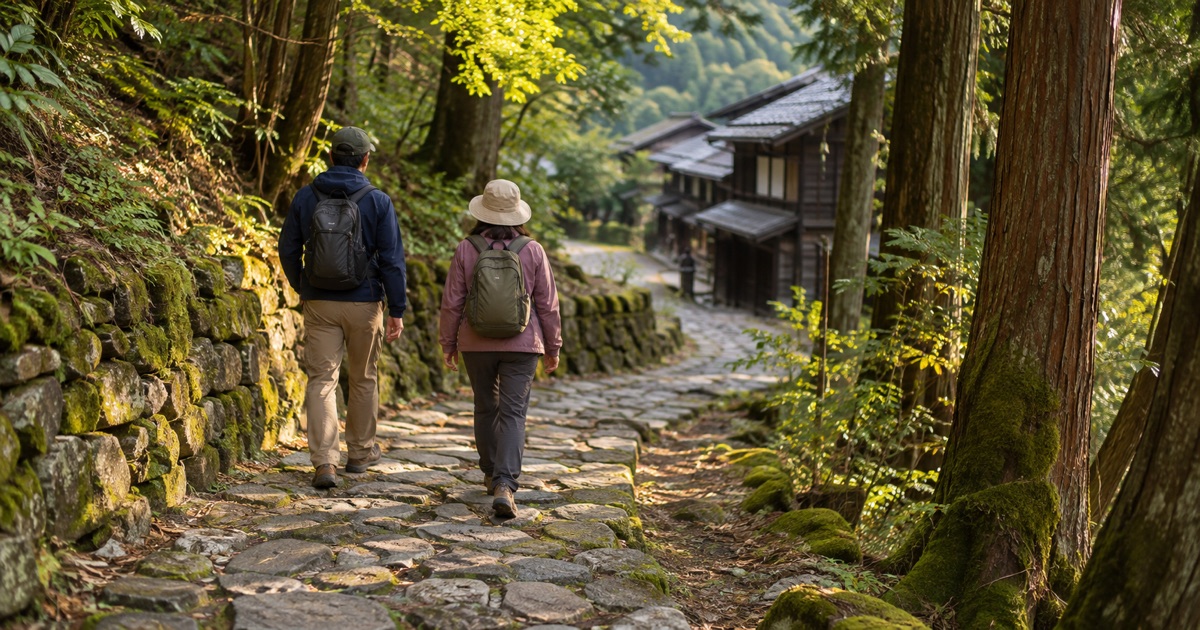
The Nakasendo was once a major Edo-period route connecting Kyoto and Tokyo, and this particular section preserves old post towns, stone-paved paths, and forest trail with waterfalls. Unlike longer stretches of the historic road, it doesn't require special hiking experience — just reasonably fit legs and good shoes.
What Makes Magome-Tsumago the Right Choice for Families?
This roughly 7-8km section is popular precisely because it's manageable. The path runs mostly downhill if you start in Magome and finish in Tsumago, which is the direction most people recommend for anyone walking with children. There are a few short, steeper climbs near the pass, but nothing technical.
Both towns are also charming to wander around before or after the walk — wooden buildings, small shops, and a slower pace that's a nice contrast to Tokyo or Kyoto. Kids who like old streets and quiet mountain scenery tend to enjoy it more than a packed city itinerary.
How Long Does the Walk Take with Kids?
Adults without children typically complete Magome to Tsumago in around 2 hours at a steady pace. With kids, especially those under 8, plan for roughly 2.5 to 4 hours once you factor in snack breaks, photo stops, and slower descents on uneven ground. Older children who are used to walking may move closer to adult pace.
If you have a toddler who can't walk that distance, a soft structured carrier is far more practical than a stroller. Parts of the trail are unpaved, with tree roots, loose stones, and some stairs, so wheels are not a good option for most of the route.
A Realistic Timeline for a Day Trip
- Morning: Travel to Magome (see transport section below), browse the main street, use the toilets before setting off.
- Midday: Walk the trail, stopping at the waterfall and rest areas along the way for lunch or snacks.
- Afternoon: Arrive in Tsumago, explore the preserved townscape, rest before heading back.
Build in extra buffer time if you're traveling with a baby who naps on a set schedule — there's no harm in starting the walk right after a nap rather than trying to time it around one.

We are working to carry Japanese craft and everyday culture beyond Japan, by building Japan Towns with local partners.
Read the Japan Town plan →How Do You Get to Magome and Tsumago?
Neither Magome nor Tsumago has its own train station directly on the trail, which trips up a lot of first-time visitors. The usual approach is to take a train to Nakatsugawa (中津川) or Nagiso (南木曽) Station, both served by limited express and local trains on the JR Chuo Line, and then connect by local bus.
- Nakatsugawa Station connects to Magome by bus, a ride of roughly 25-30 minutes.
- Nagiso Station connects to Tsumago by bus, a ride of around 10 minutes.
Bus schedules in this area are not frequent, so check timetables in advance rather than assuming you can simply turn up. Timetables, fares, and connections change, so confirm details on JR Central before you travel, since the JR Chuo Line through this region falls under JR Central and JR East depending on the exact section.
Should You Use the Luggage Forwarding Service?
A same-day luggage forwarding service operates between Magome and Tsumago during the main travel season, carrying bags from one town to the other so you don't have to walk with a full pack. This is genuinely useful for families, since it frees up hands for holding a toddler's hand on uneven ground or carrying a baby carrier instead of a backpack. Capacity is limited and the service typically only runs certain months, so check current details locally once you arrive, ideally at the tourist information point in Magome.
What Should You Pack for the Walk?
Pack lighter than you think, but don't skip these basics:
- Proper shoes for every walking family member — sneakers or trail shoes, not sandals. The path includes loose gravel and stone steps.
- Snacks and water. Vending machines and a couple of rest stops exist along the trail, but they're spaced out, so bring enough for a toddler or picky eater who won't want to try unfamiliar snacks mid-hike.
- A light rain layer. Forest sections can be cooler and damper than the towns, and weather in mountain valleys changes quickly.
- Cash. Small shops and vending machines in rural areas don't always take cards.
- Insect repellent in warmer months, since parts of the trail pass through forest.
- A baby carrier rather than a stroller, if you're traveling with a non-walking toddler.
Common Mistakes Parents Make
- Underestimating the terrain. It's not a flat paved path the whole way; there are stone steps, slopes, and some sections with loose footing.
- Not checking bus times in advance. Services to and from Nakatsugawa and Nagiso stations are infrequent, and missing one can add a long wait.
- Starting too late in the day. Walking in low light on a forest trail isn't ideal with kids; aim to start well before midday, especially in shoulder seasons when days are shorter.
- Skipping toilet breaks. Facilities exist in Magome, roughly midway, and in Tsumago, but they're not as frequent as in a city, so use them when available.
Is This Walk Right for Your Family?
If your children can comfortably walk a few kilometers, or you're happy carrying a toddler for part of the way, the Magome-Tsumago stretch of the Nakasendo Way is one of the more approachable historic walks in Japan for families. It mixes manageable distance, real scenery, and a tangible sense of history that even young kids can appreciate once they see the old wooden townscapes.
For broader trip planning, including train passes and regional travel information, the Japan National Tourism Organization is a reliable starting point before you book anything.
If your children are very young, have mobility needs, or you're traveling with multiple small kids and heavy gear, consider shortening the walk — bus to the halfway point, walk one direction only, or simply spend your time exploring Tsumago or Magome on foot without attempting the full trail. There's no rule that says you have to walk the whole thing to enjoy it.
FAQ
- Q. Is the Nakasendo Way stroller-friendly?
- A. Not really. The Magome-Tsumago section has unpaved sections, stone paving, and some steep slopes, so a baby carrier works better than a stroller for toddlers who can't walk the distance.
- Q. How long does the Magome to Tsumago walk take with children?
- A. Plan for roughly 2.5 to 4 hours including rest stops, compared with about 2 hours for adults walking at a steady pace without children.
- Q. Can we skip part of the walk if the kids get tired?
- A. Yes. A local bus connects Magome and Tsumago, so families can walk one direction and ride back, or split the route and bus the rest.
Cite or share this article
Copy the link below. If you quote this article, please link to this page as the source.