Nakasendo Trail with Kids: A Family-Friendly Walk Guide
Key takeaways
- The Magome (馬籠) to Tsumago (妻籠) walk is about 8 km and roughly 2.5-3.5 hours with kids, including stops.
- This itinerary assumes no car rental: trains and a local bus connect both ends of the trail.
- Toilets exist at both trailheads and roughly midway near Magome-toge pass, but not constantly along the route.
Is the Nakasendo Trail Good for Families with Kids?
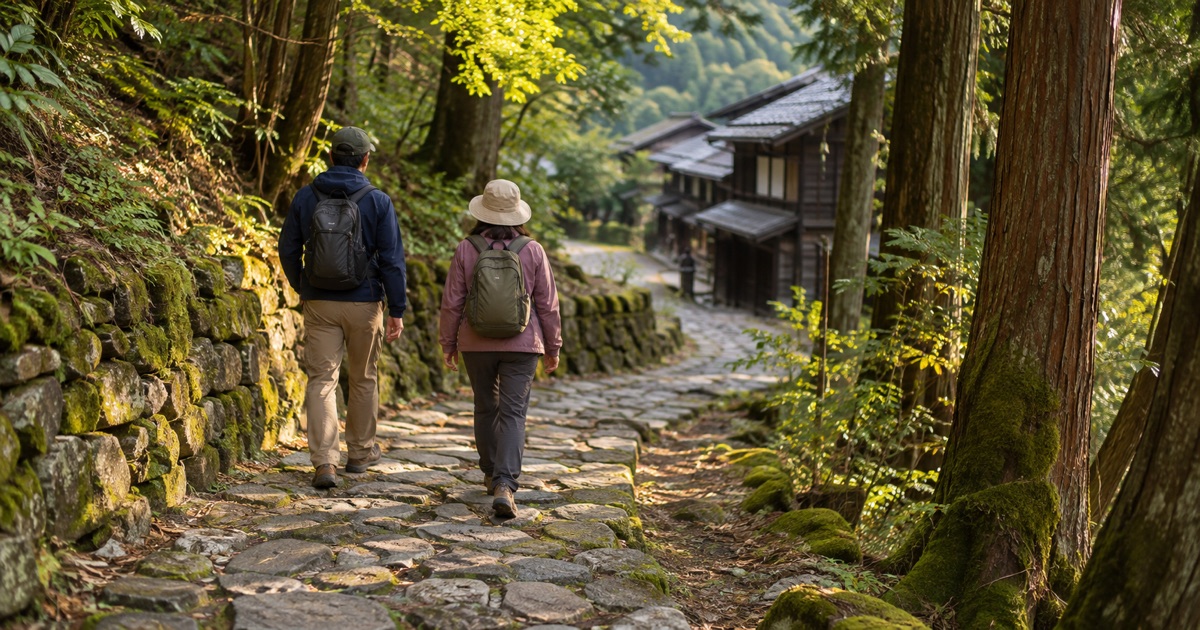
Yes — the most popular section, between the preserved post towns of Magome (馬籠) and Tsumago (妻籠) in the Kiso Valley, is manageable for most families with kids aged around 5 and up, and it needs no car rental. It's roughly 8 km of forest path, old stone paving, and rural road, usually walked in about 2 hours by adults and more like 2.5 to 3.5 hours with children once you build in snack stops, photo breaks, and a slower pace on the uphill sections.
This guide covers that one section, since it's the stretch most visitors mean when they search for "Nakasendo Trail." The full historic Nakasendo once ran between Kyoto and Tokyo, but trying to walk long stretches of it with young kids isn't realistic for a first visit to Japan.
What the Walk Is Actually Like
The path climbs out of Magome through terraced fields and forest, crosses a pass called Magome-toge, then descends through woodland toward Tsumago. There are a few short, steep sections and some uneven stone steps, so this is not a flat, paved stroll. Both towns themselves are historic post towns with wooden buildings, narrow lanes, and no car traffic in their old centers, which kids tend to find interesting even before the walk starts.
Along the trail there are occasional signs with bear bells to ring (a long-standing local custom in this forested valley), which children usually enjoy more than they worry about. Staff or volunteers are not stationed continuously along the route, so treat this as a real countryside walk, not a theme-park trail.
Getting There Without a Car
This itinerary assumes no car rental. Most visitors reach the area by train via Nagoya or Nagano, then connect to a local line into the Kiso Valley, getting off at a station such as Nakatsugawa, and continuing to Magome by local bus. Tsumago is reached from a different local station, often Nagiso.
Because routes, transfer times, and bus schedules can change, check the Japan National Tourism Organization site for general route planning, and confirm current train times on the relevant JR site — likely JR Central or JR East depending on your starting point — before you travel. Build in extra buffer time for connections, especially if you're carrying a stroller, car seat for the train portion, or lots of luggage.
A common mistake families make is treating this as a quick half-day side trip from Tokyo or Kyoto without checking total travel time first. Door to door, reaching the Kiso Valley and walking back out can easily take most of a day once you add in train changes and the walk itself. Families based in Nagoya or Nagano have an easier time making it a single relaxed day trip.

We are working to carry Japanese craft and everyday culture beyond Japan, by building Japan Towns with local partners.
Read the Japan Town plan →Suggested Family Itinerary
Walk Magome to Tsumago (Recommended Direction)
Most families walk from Magome to Tsumago rather than the reverse, partly because the initial climb out of Magome gets the uphill section done early while energy and patience are both higher.
A rough plan for a family day:
- Arrive in Magome by late morning and let kids explore the sloped main street first — this also serves as a natural "practice walk" to gauge their energy.
- Use the toilets at the Magome trailhead before setting off; this is one of the few reliable stops.
- Walk the forest and pass section at a relaxed pace, stopping for water and snacks.
- There are toilets roughly around the midpoint near the pass area, though exact facilities can change, so don't rely on this as your only stop.
- Arrive in Tsumago in the afternoon, with time to walk its preserved main street before heading back.
Shortening the Walk
If 8 km feels too ambitious for your children's ages or the weather is hot, a local bus runs between Magome and Tsumago, letting you walk one direction and ride the other, or skip the walk partway if someone is tired, overheated, or simply done. Bus frequency in a rural valley like this is limited compared to city buses, so check current timetables locally — at a tourist information counter or your accommodation — rather than assuming an hourly service.
What to Bring
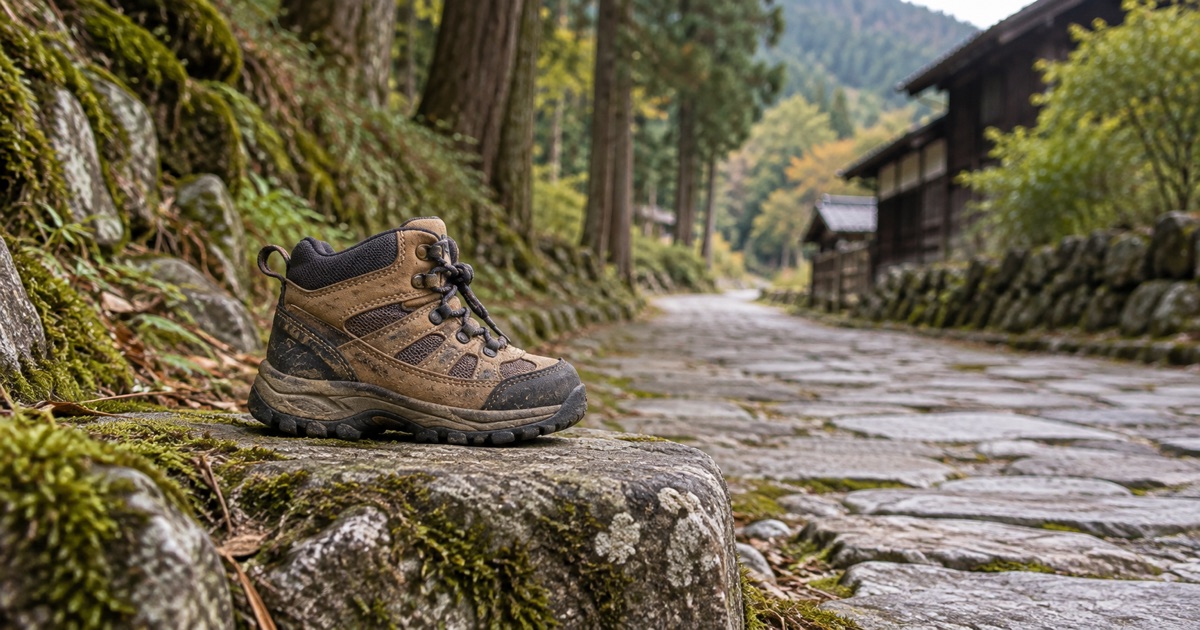
- Good walking shoes for everyone. Sandals or thin-soled shoes are a common cause of blisters and slips on the stone sections.
- A baby carrier rather than a stroller. Unpaved and stepped sections make strollers impractical for most of the route; carriers work well for toddlers who can't yet walk the full distance.
- Water and snacks. There are no convenience stores along the trail itself, only in Magome and Tsumago. Pack more water than you think you need, especially in summer.
- Layers. The Kiso Valley sits at higher elevation than Nagoya, so mornings and evenings can be noticeably cooler, even in seasons that feel warm elsewhere in Japan.
- Cash. Small shops and cafés in both towns may not accept cards.
- A paper map or downloaded offline map. Mobile signal can be patchy in forested sections.
Food and Picky Eaters
Both Magome and Tsumago have small restaurants and shops selling local foods such as soba noodles, grilled rice dumplings (gohei mochi), and seasonal produce. Menus lean traditional, so if you're traveling with a picky eater, it's worth packing a familiar backup snack rather than counting on finding something plain and simple once you arrive. Options thin out once you're on the trail itself, so eat before setting off or carry a packed lunch.
Toilets and Nap Timing
Toilets are available at the Magome and Tsumago trailheads and at a rest point roughly midway, but facilities and their exact locations can change, so don't plan around a precise number of stops. For families with toddlers who still nap, it's worth timing the walk around nap schedules where possible — either starting early so a nap happens on the train ride home, or building in a longer rest stop partway along the trail.
A Few Common Mistakes to Avoid
- Underestimating total travel time. The train and bus connections to reach the trailhead can take longer than the walk itself.
- Bringing a stroller expecting a paved path. It isn't one for most of the route.
- Not checking bus and train schedules in advance. Services in this rural valley are far less frequent than in major cities, and gaps between buses can be long.
- Skipping water because the walk "looks short" on a map. The uphill section out of Magome is more tiring than the distance suggests, especially for children.
Before you go, check current transport schedules and any trail notices on an official source such as the Japan National Tourism Organization site, since opening hours, bus timetables, and facility availability in the Kiso Valley can change with the season.
FAQ
- Q. Is the Nakasendo Trail stroller-friendly?
- A. Not really. The Magome-Tsumago section has unpaved sections, slopes, and stone steps, so a baby carrier works better than a stroller for toddlers.
- Q. How long does the Magome to Tsumago walk take with young children?
- A. Plan for roughly 2.5 to 3.5 hours at a child's pace, including rest and snack stops, versus about 2 hours for adults walking briskly.
- Q. Can we skip part of the walk if the kids get tired?
- A. Yes. A local bus connects Magome and Tsumago, so families can walk one direction and ride back, or bail out partway if needed. Check current schedules locally since services can be limited.
Cite or share this article
Copy the link below. If you quote this article, please link to this page as the source.