Kumano Kodo Trail With Kids: A Family-Friendly Guide
Key takeaways
- Choose short sections like Daimon-zaka or parts of the Nakahechi route rather than multi-day stretches with young children.
- Toilets and shops are sparse on the trail itself, so plan around villages like Hongu, Yunomine Onsen, and Nachi.
- Base yourselves in Kii-Tanabe or Shingu and use local buses, since the full pilgrimage route is not stroller-friendly.
Can You Walk the Kumano Kodo With Kids?
Yes, the Kumano Kodo can absolutely be done with children, but the key is choosing a short, manageable section rather than attempting a multi-day pilgrimage route. Families with kids who can walk steadily for an hour or two will enjoy short forest walks like the Daimon-zaka (大門坂) slope near Nachi, while very young children are best carried rather than pushed, since strollers do not work on this trail.
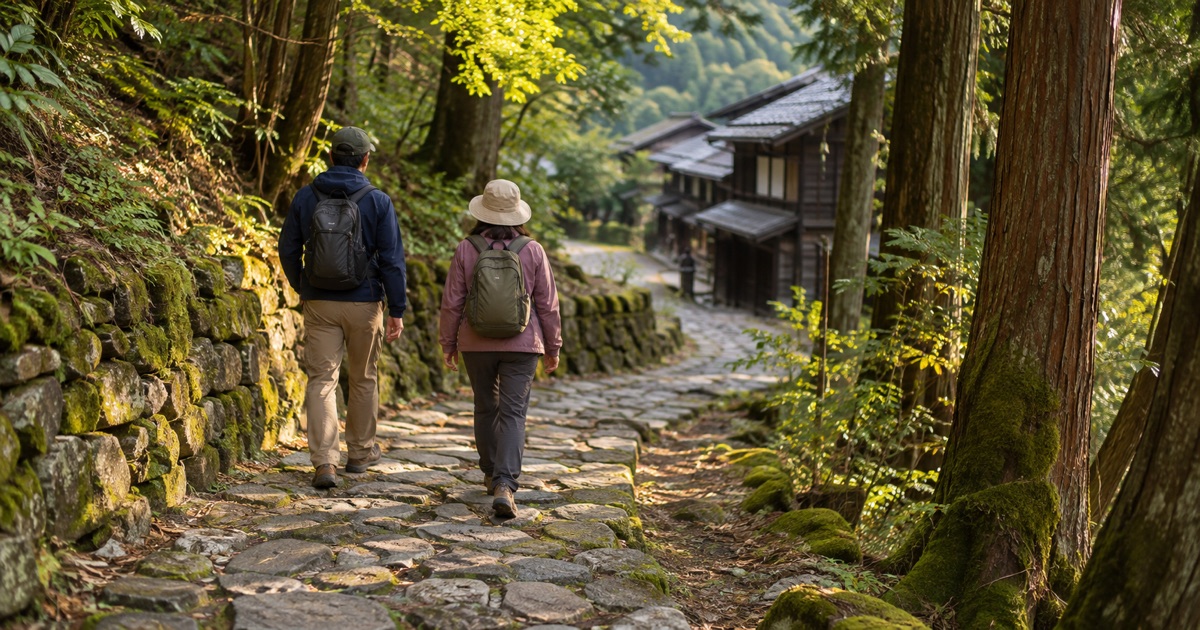
The Kumano Kodo (熊野古道) is a network of ancient pilgrimage routes on the Kii Peninsula, registered as a UNESCO World Heritage site. Most of it winds through steep mountain forest with stone steps and tree roots underfoot, which makes it a rewarding but physically demanding walk rather than a casual stroll. The good news is that the region also has shrines, onsen towns, and a coastline that make for an easy, memorable family trip even if you only walk a small portion of the trail.
Which Section Is Best for Families?
Daimon-zaka: the easiest introduction
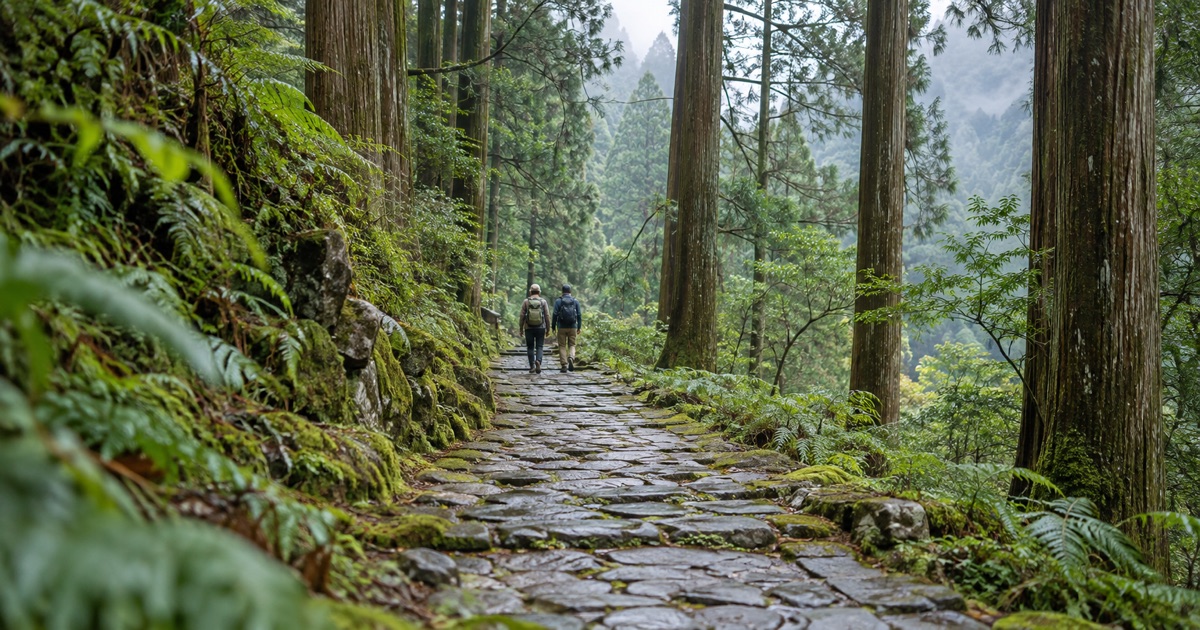
For most families, the stone-paved slope at Daimon-zaka near Nachi Taisha is the best starting point. It's a relatively short, atmospheric walk lined with tall cedar trees, and it leads up toward Kumano Nachi Taisha shrine and the famous Nachi waterfall. The surface is uneven stone, so sturdy shoes are essential, but the walk is short enough that most children aged 5 and up can manage it on foot, and younger kids can be carried.
Short stretches of the Nakahechi route
The Nakahechi (中辺路) is the main historical route through the mountains between Tanabe and Hongu. Full-day stretches of this route are not realistic with young children, since the path is narrow, steep in places, and has very few facilities. However, some shorter segments near villages can be walked as a taste of the pilgrimage experience without committing to a full day. If you're unsure which stretch suits your family's fitness level, it's worth checking conditions and route options through the regional tourism information before you go, since trail conditions and bus access can change.
Save the long multi-day routes for older kids or a future trip
Serious multi-day hikes across mountain passes are best left until children are older and experienced walkers, or saved for a parents-only trip. Attempting a long stretch with tired toddlers is a common mistake that turns a special trip into a stressful one.

We are working to carry Japanese craft and everyday culture beyond Japan, by building Japan Towns with local partners.
Read the Japan Town plan →Getting There From Osaka, Kyoto, or Nagoya
The Kumano Kodo sits on the Kii Peninsula, and reaching it takes some planning since there's no shortcut by shinkansen all the way in.
From Osaka or Kyoto, most families travel to Kii-Tanabe (紀伊田辺) Station by limited express train, which takes roughly 2.5 to 3.5 hours depending on your starting station. From Nagoya, the approach is usually via Shingu (新宮) on the other side of the peninsula, which also takes several hours. Check current routes and limited express services through JR West or JR Central before booking, since schedules and which trains run on a given day can change.
From Kii-Tanabe or Shingu, local buses connect to trailheads like Hongu, Yunomine Onsen, and Nachi. Bus frequency on these mountain routes is limited, sometimes just a handful of departures a day, so look up the timetable in advance rather than assuming you can turn up and go. Renting a car is a popular alternative for families, since it removes the pressure of catching a specific bus with tired kids in tow.
What to Bring for a Family Hike
Pack as if you're doing a proper forest walk, not a city sightseeing day:
- Sturdy shoes for everyone, including kids. Stone steps get slippery, especially after rain.
- A baby carrier rather than a stroller if you have a child too young to walk the whole way.
- Rain gear. The Kii Peninsula is one of the wettest parts of Japan, and mountain weather changes quickly.
- Water and snacks. Vending machines and shops are rare once you're on the trail itself, so bring more than you think you need.
- Cash. Rural shops, buses, and some onsen facilities may not accept cards.
- Bug spray in warmer months, since the trail runs through dense forest.
Toilets, Naps, and Picky Eaters
These are the practical worries every parent has, and the Kumano Kodo requires a bit more planning than a typical city day trip.
Toilets are available at major trailheads, shrines like Kumano Hongu Taisha, and in villages such as Yunomine Onsen, but they are scarce along the trail itself. Use facilities before you set off and plan your walking time around known stops.
Naps are tricky mid-hike, so if your child still naps, try to time the walk around it, or plan a shorter walk and let them sleep during the long bus or train transfer instead.
Picky eaters may find the food options in small mountain villages fairly limited, often local teishoku-style set meals, noodles, or simple cafés rather than familiar choices. Bringing some snacks from a convenience store before you head into the mountains is a sensible backup.
Where to Stay With Kids
Basing yourselves in a town rather than trying to day-trip the whole peninsula from Osaka makes the trip far less rushed. Kii-Tanabe is a practical base for the Nakahechi side, with regular train access back to Osaka and Kyoto. Yunomine Onsen, a tiny hot spring village near Hongu, is a lovely overnight stop if you don't mind a quieter, rural setting with fewer dining choices. Shingu or nearby Katsuura work well if you're focusing on the Nachi side.
A Simple One-Day Plan
For a first visit with children, many families find the easiest approach is:
- Travel to Kii-Tanabe or Shingu by limited express.
- Transfer by bus (or rental car) toward Nachi.
- Walk the Daimon-zaka slope at a relaxed pace.
- Visit Kumano Nachi Taisha and the waterfall viewpoint nearby.
- Head back toward your accommodation before the evening bus services thin out.
This gives children a genuine taste of the ancient pilgrimage route, a shrine visit, and a dramatic waterfall, all in a single, manageable day.
For general planning advice and up-to-date travel conditions around the region, the Japan National Tourism Organization is a reliable starting point before you finalize train and bus connections.
FAQ
- Q. Is the Kumano Kodo suitable for toddlers or young children?
- A. Short, paved, or well-maintained sections such as Daimon-zaka near Nachi are manageable for young children in a carrier, but most of the Nakahechi route involves steep, uneven stone paths and is better suited to kids around age 6 and up who can walk on their own.
- Q. Can we use a stroller on the Kumano Kodo?
- A. No. The historic trail is mostly forest paths, stone steps, and tree roots, so strollers are not practical. A baby carrier works far better for younger children.
- Q. How do we get to the Kumano Kodo from Osaka or Kyoto with kids?
- A. Take a limited express train toward Kii-Tanabe or Shingu, then transfer to a local bus. The journey takes roughly 2.5 to 4 hours depending on your start point and the exact trailhead, so build in time for rest and toilet stops.
Cite or share this article
Copy the link below. If you quote this article, please link to this page as the source.