Kagoshima with Kids: Volcanoes, Trains, and Family Travel
Key takeaways
- Kagoshima is very family-friendly, offering active volcano views, short 15-minute ferry rides, and wide open parks.
- Most major city attractions accommodate strollers, but volcano ash means bringing wet wipes and light stroller covers.
- Classic regional dishes like mild Kurobuta pork tonkatsu and sweet potato treats make feeding picky eaters simple.
Kagoshima is one of the most exciting, kid-friendly destinations in southern Japan, pairing dramatic active volcano views with relaxed seaside parks and unique train rides. Visiting Kagoshima with kids is remarkably smooth thanks to compact downtown transit, spacious public walkways, and mild, sweet regional food that appeals to younger palates.
Sitting at the southern tip of Kyushu, this warm coastal hub centers around Sakurajima (桜島), an active volcano puffing gentle steam across Kinko Bay. For families seeking a balance between outdoor adventure and urban ease away from the crowded Golden Route, Kagoshima delivers a memorable, low-stress escape.
Top Things to Do in Kagoshima with Kids
Riding the Sakurajima Ferry and Exploring the Lava Fields
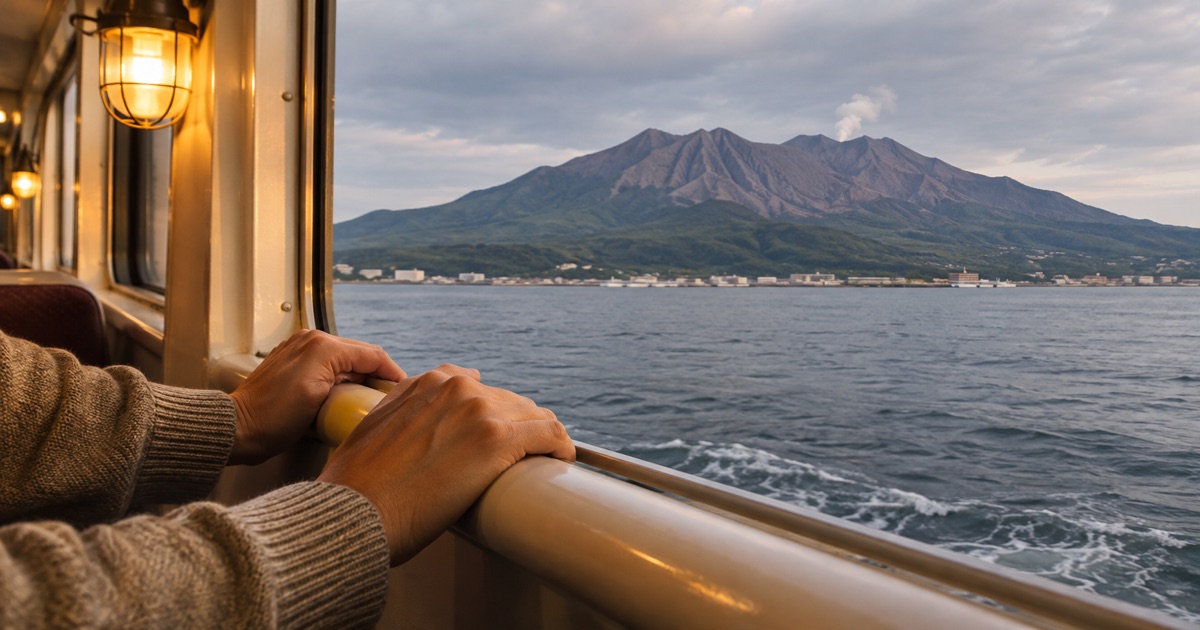
The centerpiece of any Kagoshima trip is getting close to the volcano. The Sakurajima Ferry (桜島フェリー) leaves Kagoshima Port around the clock, making it an easy, flexible excursion for families managing nap schedules.
- The Boat Ride: The crossing takes roughly 15 minutes each way. Children love watching the smoking peak grow larger from the open-air observation deck. The ferries are wide, barrier-free, and easily handle strollers.
- Onboard Snack: A classic local ritual is grabbing a bowl of piping hot udon from the small noodle shop on the passenger deck, costing around ¥500 ($3.30). The broth is light, savory, and quick enough for small children to slurp before docking.
- Nagisa Lava Trail and Footbath: Just a 10-minute walk from the Sakurajima ferry terminal sits the Nagisa Park Footbath (桜島溶岩なぎさ公園足湯). It is one of the longest outdoor footbaths in Japan, fed by natural thermal waters. Kids can dip their toes while gazing at the water. Bring a hand towel in your day bag to dry off little feet.
Sengan-en Garden (仙巌園)
Sengan-en is a vast, historic seaside estate once owned by the ruling Shimadzu clan. Its landscaped grounds offer a direct view of Sakurajima framed by the bay.
- Spacious Walking: Unlike dense temple grounds, Sengan-en features wide gravel and paved paths where energetic toddlers can walk safely without bumping into tight crowds. While main routes accommodate strollers, a few stone steps lead up to viewpoints, so a lightweight stroller or baby carrier is handy.
- Traditional Sweets: Stop at the garden tea shops for jambo mochi (両棒餅), small grilled rice cakes skewered on two bamboo sticks and dipped in a sweet soy or miso glaze. They are warm, soft, and rarely refused by picky eaters.
- Glassblowing Craft: Adjacent to the garden, older children can safely observe artisans shaping vibrant Satsuma Kiriko cut glass inside the craft workshops.
Io World Kagoshima Aquarium (いおワールドかごしま水族館)
Located right next to the Sakurajima Ferry Terminal, Io World is a rainy-day savior for parents.
- Kuroshio Tank: The centerpiece tank houses majestic whale sharks, rays, and schools of tuna gliding through clear blue water. The viewing benches allow tired parents to rest while toddlers watch sea life.
- Dolphin Waterway: Out in the canal behind the aquarium, dolphins sometimes practice jumps in an open outdoor channel. This viewing area is often accessible for free from the waterfront promenade, letting you gauge your child's interest before buying tickets.
- Parent Amenities: The aquarium provides clean nursing rooms (jyunyushitsu), stroller rental desks, and changing tables across multiple levels.
Hirakawa Zoological Park (平川動物公園)
Located south of central Kagoshima, this open-air park features a sprawling African savannah zone with Sakurajima rising in the backdrop.
- Animal Encounters: Kids can see white tigers, koalas, and giraffes. The paths are wide, green, and stroller-friendly, with regular shaded benches for snacks.
- Footbath on Site: Like many public spaces in volcanic Kagoshima, the zoo has a natural hot-spring footbath where tired feet can recharge mid-walk.
Getting Around Kagoshima with Strollers and Bags
Kagoshima's core transit consists of city trams, local buses, and JR trains. Navigating the city is simple if you plan around vehicle types.
Trams vs. Walking
The Kagoshima City Tram (鹿児島市電) runs frequently between Kagoshima-Chuo Station (鹿児島中央駅) and the downtown dining district of Tenmonkan (天文館).
- Stroller Advice: Some trams are vintage models with narrow doors and high steps. Modern, low-floor barrier-free trams run on a regular schedule; look for the ultra-low-floor icons on station display boards. If an older tram arrives, simply fold your stroller before boarding.
- Fares: Tram fares are flat, typically around ¥170 ($1.15) for adults and half-price for school-age children, payable by IC card (Suica, Pasmo, Sugoca) or cash.
Trains for Day Trips
For day trips south to the coastal hot-spring town of Ibusuki (指宿), the scenic train Ibusuki no Tamatebako (指宿のたまてばこ) operated by JR Kyushu is a beloved family experience. The train puffs theatrical water vapor from above the doors when passengers board, mimicking the legendary underwater treasure box of Urashima Taro. Reserve your seats in advance via the Japan National Tourism Organization portal or the official JR booking system.
We are working to carry Japanese craft and everyday culture beyond Japan, by building Japan Towns with local partners.
Read the Japan Town plan →Practical Family Tips: Volcano Ash and Packing
While Kagoshima is sunny and pleasant, active Sakurajima means volcanic ash falls across town depending on the day's wind direction.
- Check Ash Forecasts: Local morning weather reports display an animated ash prediction graphic (kokyo yoho). If ash is blowing toward the city center, consider indoor destinations like Io World Aquarium or the Kagoshima City Museum of Art.
- Pack Eye Protection and Wipes: On windy, ash-heavy days, fine dust can irritate eyes. Pack sunglasses for kids, a brimmed hat, and plenty of wet wipes to wipe down stroller wheels and sticky hands.
- Stroller Rain Cover: Keep a clear universal stroller cover tucked underneath your buggy. It works just as effectively against flying volcanic grit as it does against sudden rain showers.
- Coin Lockers: Kagoshima-Chuo Station has abundant luggage lockers on the ground and second floors, allowing you to drop heavy bags immediately after arriving on the Kyushu Shinkansen.
What to Eat with Picky Eaters
Kagoshima is famous throughout Japan for exceptional agricultural and livestock quality. The food is naturally savory, tender, and accessible to young palates.
Kurobuta Pork Tonkatsu
Kagoshima's black pork (Kurobuta) is exceptionally tender without stringiness.
- Why Kids Love It: A crisp, breaded pork cutlet served with sweet tonkatsu dipping sauce and warm rice is a universal favorite for children.
- Where to Find It: Family-friendly tonkatsu restaurants line the restaurant floors inside the Amu Plaza shopping center directly attached to Kagoshima-Chuo Station. These restaurants feature high chairs (kodomo-isu), children's cutlery, and unlimited shredded cabbage and rice refills for hungry parents. A family set meal generally runs around ¥1,800 to ¥2,600 ($12.00 to $17.50) per adult.
Satsuma-imo (Sweet Potato Treats)
Sweet potatoes thrive in Kagoshima's rich volcanic soil. You will find them roasted whole (yaki-imo), churned into purple-hued soft-serve ice cream, or fried into crisp, sweet glazed sticks (karinto). They serve as healthy, easily portable walking snacks for toddlers needing quick fuel.
Shirokuma Shaved Ice (白熊)
Originating in Kagoshima, Shirokuma translates to "white bear." It is a towering bowl of finely shaved ice drenched in sweetened condensed milk and decorated with colorful fruits, red beans, and jellies to resemble a bear's face.
- Visit the famous Mujaki (無邪気) cafe in the Tenmonkan arcade. They offer "baby size" portions that are still plenty generous for an adult and child to share on a warm afternoon.
Sample 2-Day Kagoshima Family Itinerary
- Day 1: Volcano and Sea Life
- Morning: Arrive at Kagoshima-Chuo Station, drop bags, and take the tram to the pier.
- Mid-day: Ride the Sakurajima Ferry, enjoy deck noodles, and paddle your feet at Nagisa Lava Park.
- Afternoon: Return across the bay to explore Io World Kagoshima Aquarium.
- Evening: Dinner at Tenmonkan for Shirokuma shaved ice and Kurobuta pork.
- Day 2: Gardens and Scenic Views
- Morning: Board the local city view loop bus to Sengan-en Garden; snack on warm jambo mochi.
- Afternoon: Head up to Shiroyama Park Observation Deck (城山展望台) for panoramic views of the city skyline and the smoking volcano across the blue water.
- Evening: Board the Kyushu Shinkansen or regional coastal express train onward to your next destination. Check long-distance routes through JR West or JR Kyushu travel portals.
Kagoshima offers children a vivid encounter with living nature alongside the reliable safety, cleanliness, and hospitality that make family travel in Japan a joy. Take your time, monitor the volcano breeze, and savor the slow pace of the south.
FAQ
- Q. Is Sakurajima safe to visit with young children?
- A. Yes, Sakurajima is an inhabited island with daily life, schools, and hospitals. Check local wind and ash forecasts before boarding the ferry.
- Q. Can you navigate Kagoshima city easily with a stroller?
- A. Central Kagoshima and waterfront areas have flat sidewalks and elevator access, though a compact folding stroller is best for retro trams.
- Q. How many days should a family spend in Kagoshima?
- A. Spending two to three days allows families to explore Sakurajima, visit the local aquarium and gardens, and enjoy relaxing day trips without rushing.
Cite or share this article
Copy the link below. If you quote this article, please link to this page as the source.