Visiting Naoshima Island with Kids: A Family Guide
Key takeaways
- Outdoor art like Yayoi Kusama's pumpkins works well for kids, while some indoor museums have age limits or quiet rules.
- Strollers are difficult on island buses and inside galleries, making a lightweight baby carrier essential for younger toddlers.
- Most museum tickets must be booked online in advance, as same-day walk-in slots are extremely limited.
Visiting Naoshima Island with kids is entirely doable and rewarding, provided you balance quiet indoor galleries with open-air coastal art installations. Toddlers and school-age children generally love exploring the famous outdoor sculptures, but parents must plan ahead for ferry timetables, hilly terrain, and timed museum tickets.
Naoshima (直島), floating in the Seto Inland Sea, is famous worldwide as Japan's premier "art island." While it has a reputation for minimalist, hushed architecture, children do not need to sit out the experience. With the right pacing and realistic expectations, the island makes a memorable day trip or overnight stay.
Planning Your Journey and Logistics
Overview
Getting to an island requires multiple transit stages, which can test little tempers if transitions are rushed. Most family trips start from Uno Port (宇野港) in Okayama Prefecture or Takamatsu Port (高松港) in Kagawa Prefecture.
Details
Ferries run regularly between Uno Port and Naoshima's Miyanoura Port (宮浦港), taking roughly 20 minutes on the standard car ferry. If departing from Takamatsu on the Shikoku side, the regular ferry takes around 50 to 60 minutes. Ferries are spacious, smooth, and easily accommodate strollers, luggage, and restless toddlers who want to watch the waves. Passenger-only high-speed boats also operate on some routes, but standard large ferries offer more room to move around.
Train access to the ports is straightforward. For Uno, take the JR Uno Line to Uno Station (宇野駅), which sits just a short walk across the street from the ferry terminal. For route planning on the mainland rail network, refer to JR West.
Action
- Arrive at the ferry terminal at least 20 minutes before departure to purchase tickets from the vending machines.
- Check current ferry schedules before you travel, as seasonal changes and maintenance days occur.
- If traveling with heavy luggage, leave large suitcases in coin lockers at Okayama Station or Takamatsu Station; carry only a small backpack to the island.
Getting Around the Island with Children
Overview
Naoshima has steep hills, winding roads, and narrow village streets. Selecting the right mode of transport is critical when traveling with small children.
Details
The three main ways to move around are the community bus, walking, and rental bicycles:
- Town Bus (町営バス): The local bus runs between Miyanoura Port, the Honmura (本村) area, and the Tsutsujiso (つつじ荘) bus stop. Fares are small change (around 100 yen for adults, half price for children, cash only). These buses are small and can fill up quickly. Strollers must be folded before boarding.
- Benesse Shuttle Bus: From Tsutsujiso, a free shuttle operates within the Benesse Art Site area to access the museums.
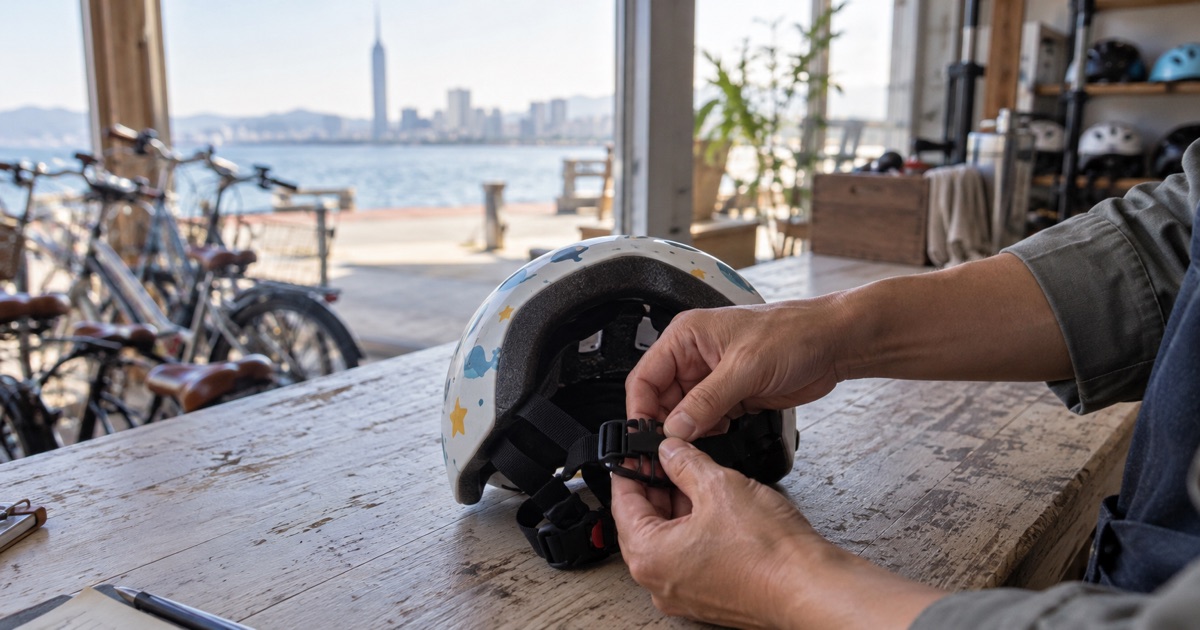
- Electric Bicycles: Extremely popular with adult visitors, but rental shops have very limited supplies of electric-assist bikes with child seats (mamachari). If you have two or more children, finding matching family bike setups on the day is rarely possible without advance reservation, and some shops restrict child passengers on specific routes due to steep slopes.
- Strollers vs. Carriers: While paved roads exist, art sites have gravel paths, stone staircases, and strict rules against rolling strollers inside exhibition halls.
Action
- Bring an ergonomic baby carrier instead of relying purely on a stroller. If you bring a stroller, choose a lightweight, ultra-compact folding umbrella model.
- Keep a coin purse ready with 100-yen coins for the community bus drivers.
- If you hope to rent an e-bike with a child seat, contact rental shops near Miyanoura Port well in advance to ask about availability, or plan on using the buses instead.
We are working to carry Japanese craft and everyday culture beyond Japan, by building Japan Towns with local partners.
Read the Japan Town plan →Navigating the Art Sites with Kids
Overview
Naoshima’s art is split between wide-open outdoor spaces, village installations, and high-concept underground museums. Matching the venue to your child’s temperament prevents meltdowns.
Details
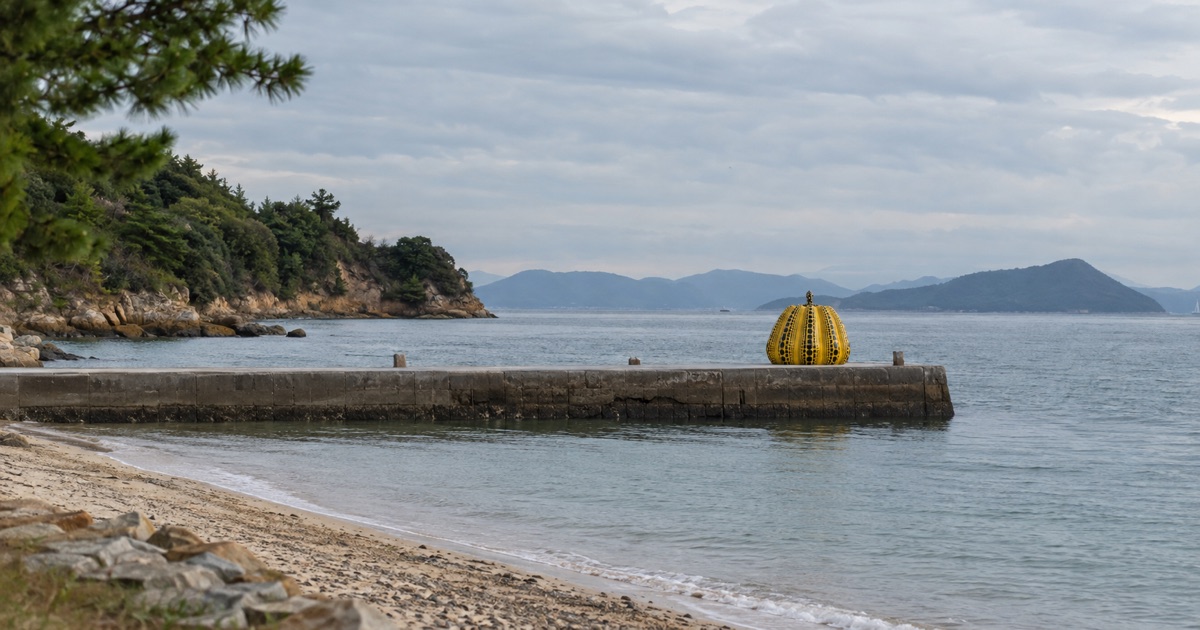
The outdoor art along the coastline is the undisputed highlight for families. At Miyanoura Port, Yayoi Kusama’s Red Pumpkin welcomes visitors. Kids can step inside its hollow, polka-dotted interior and look out through its cut-out windows. Along the beach near Benesse House, the iconic Yellow Pumpkin offers a bright photo opportunity beside the water. The surrounding lawns and beaches feature various open-air sculptures where children can walk freely without the pressure of library-quiet gallery etiquette.
Indoor museums require more caution:
- Chichu Art Museum (地中美術館): Built mostly underground by Tadao Ando, this museum relies heavily on natural light and silence. Echoes carry, footwear must be removed in certain rooms (such as the Walter De Maria installation), and running is strictly forbidden. It is magical for older children interested in space and architecture, but challenging for energetic toddlers.
- Art House Project (家プロジェクト): Located in the residential village of Honmura, these converted historic houses blend into the neighborhood. Walking between them feels like a treasure hunt, but some individual houses, like Minamidera, immerse visitors in total sensory darkness for several minutes, which can terrify younger children afraid of the dark.
For broader travel ideas across the country, check the Japan National Tourism Organization for regional event updates.
Action
- Reserve your timed-entry tickets online weeks in advance for Chichu Art Museum; same-day entries are rarely available during busy months.
- Skip pitch-black or delicate exhibits if your child is prone to sensory overload, and spend extra time on the open coastline.
- Set clear boundaries before entering quiet galleries: practice "whisper voices" and hold hands.
Food, Bathrooms, and Rest Stops
Overview
Naoshima is a working rural community, not a theme park. Dining options are limited, operating hours can be erratic, and convenience stores are few and far between.
Details
There is a 7-Eleven convenience store near Miyanoura Port, but you will find virtually no convenience stores once you head deeper into the museum areas. Island cafes often close between lunch and dinner, and many shut down entirely on Mondays (when many museums are also closed).
For picky eaters, island cafes typically serve simple curry rice, udon noodles, or fish sets. If your children need specific foods, dairy-free alternatives, or frequent snacks, island shelves will not offer much variety.
Public restrooms are generally modern and clean, particularly at the ferry terminals, Benesse House area, and Honmura lounge. Many include accessible stalls where you can change a diaper, but dedicated nursing rooms (baby rooms) are rare outside the primary port buildings.
Action
- Stock up on water, fruit pouches, rice balls, and toddler snacks at Uno Port or Takamatsu Port before boarding the morning ferry.
- Plan lunch early (around 11:30 AM) to avoid long cafe queues in Honmura or Miyanoura.
- Keep a small plastic trash bag in your daypack; public garbage cans are scarce across the island, and you must carry your diaper and snack trash back with you.
Common Mistakes to Avoid on Naoshima
Overview
Simple missteps can leave families stranded or stuck waiting around with exhausted children.
Details
The most common mistake is visiting on a Monday. Most museums, galleries, and island cafes close on Mondays (or Tuesdays if Monday is a national holiday). Arriving on a closure day means seeing only outdoor pieces from the outside, with very few food options open.
Another frequent pitfall is cutting ferry departures too close. Missing the late afternoon ferry can disrupt hotel reservations on the mainland, while missing the last island bus to the port might leave you facing a 40-minute uphill walk with an exhausted child.
Finally, do not over-pack your schedule. Trying to see the Art House Project, Chichu Art Museum, Benesse House Museum, and the Lee Ufan Museum in a single day is exhausting for adults and nearly impossible with a stroller.
Action
- Check the official Benesse Art Site calendar to verify museum operational days before locking in your travel dates.
- Aim to catch a ferry back to the mainland one departure earlier than you strictly need, avoiding evening rush periods.
- Pick a maximum of one major indoor museum and one cluster of outdoor art per day to keep the trip enjoyable for the whole family.
FAQ
- Q. Can you bring a stroller to Naoshima?
- A. You can bring a stroller on the ferry and paved coastal paths, but island buses have very little space and art museums generally require you to park them outside. A compact baby carrier is much easier for getting around.
- Q. Are museums on Naoshima child-friendly?
- A. Outdoor sculptures like the yellow and red pumpkins are great for all ages, but indoor venues like the Chichu Art Museum require quiet voices, dim lighting adjustment, and careful supervision. Some sites do not allow children under certain ages.
- Q. How do you get around Naoshima with young children?
- A. Most families use the local town bus combined with walking. Rental bicycles are extremely popular, but standard child seats on electric rental bikes can be limited and island hills can be steep.
Cite or share this article
Copy the link below. If you quote this article, please link to this page as the source.