Buying Tsushima Kids Shoes: Island Footwear Guide
Key takeaways
- Buying kids shoes on Tsushima is easiest in Izuhara at general retailers or larger supermarkets like Tiara.
- Japanese children's shoe sizing runs in exact centimeters; measuring your child's foot in advance avoids fit errors.
- Stock on the island is limited compared to mainland Kyushu, so pack a sturdy primary pair and an extra backup.
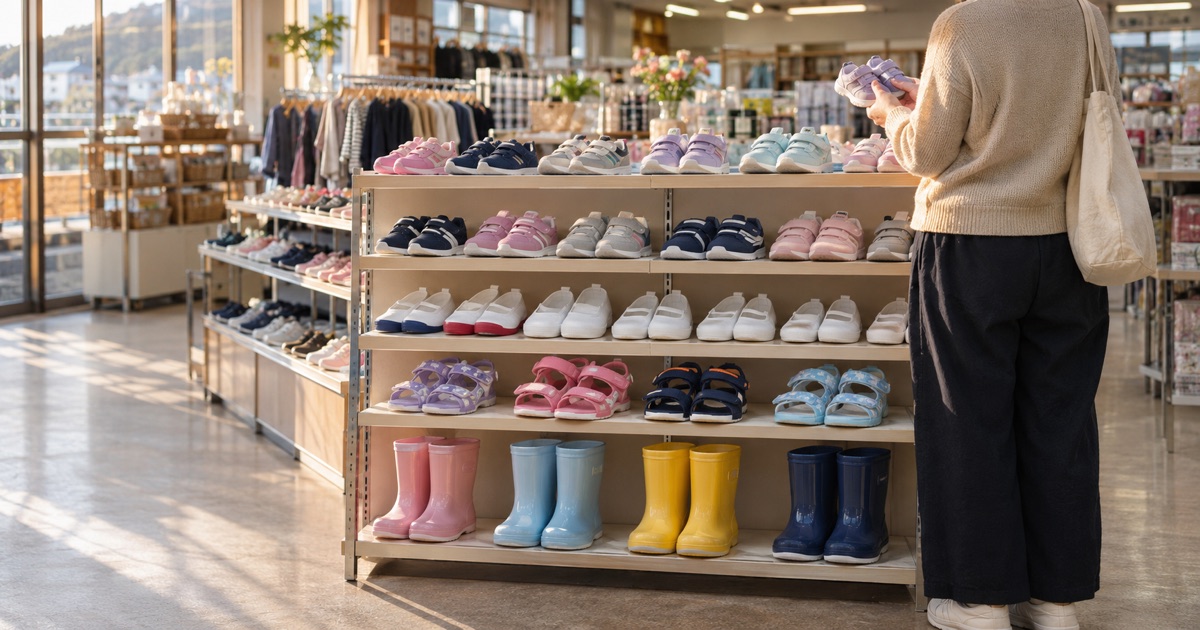
If you need to buy Tsushima kids shoes during a trip to Nagasaki's rugged border island, your best option is to head to general shopping facilities in the main southern town of Izuhara (厳原). Finding replacement children's footwear on Tsushima (対馬) requires knowing where local family department stores and clothing retailers cluster, because dedicated shoe boutiques for toddlers and young children are limited outside the island's commercial hub.
Tsushima offers dramatic coastal scenery, historical mountain trails, and a unique atmosphere halfway between mainland Japan and South Korea. However, outdoor exploration means muddy shoes, wet socks from rocky beaches, or broken straps on sandals happen quickly. Here is what parents need to know to locate replacement footwear, understand Japanese kids' sizing, and keep your itinerary moving smoothly.
Where to Buy Kids Shoes on Tsushima Island
Because Tsushima is an elongated island spanning roughly 70 kilometers from north to south, shops are not evenly spread out. If an active day of beachcombing or walking forest trails results in soaked or broken footwear, aim for the southern population center first.
Izuhara Town: Your Best Bet for Children's Footwear
Izuhara (厳原) is the administrative and commercial heart of Tsushima. If you need a reliable selection of everyday footwear, plan a stop here.
- Tiara Shopping Mall (ティアラ): Located in downtown Izuhara, this community shopping center serves as the main retail complex on the island. It houses a supermarket, casual clothing retailers, and daily goods sections. You can often find basic children's slip-ons, school shoes (uwabaki, 上履き), everyday running sneakers, and seasonal sandals or rubber rain boots (nagagutsu, 長靴).
- Shimamura (しまむら): Located along the bypass road north of central Izuhara, Fashion Center Shimamura is Japan's go-to budget family clothing chain. According to local family shopping patterns across regional Japan, Shimamura consistently stocks practical, affordable kids' sneakers, infant booties, and weather-appropriate footwear featuring popular cartoon characters.
- Daiso & 100-Yen Shops: Found inside or adjacent to commercial plazas in Izuhara, these budget stores do not sell sturdy trail shoes, but they are lifesavers for emergency rubber beach clogs, cheap flip-flops, waterproof shoe covers, and thick replacement socks while you look for real shoes.
Northern Tsushima: Kamitsushima and Hitakatsu
If you arrive via the northern port of Hitakatsu (比田勝) or spend time around the Miuda Beach area, shopping is much sparser. Hitakatsu has small daily convenience retailers, drugstores, and local hardware shops, but dedicated children's shoe racks are rare.
If an emergency happens in the north, visit local general drugstores or home improvement centers (such as Komeri, コメリ) along the main route. These shops frequently carry basic children's rubber boots and simple slip-on shoes alongside workwear and garden supplies. For a wider selection of proper running shoes, driving south toward Izuhara is usually necessary.
Japanese Kids Shoe Sizing: How to Choose the Right Pair
Unlike Western shoe sizes that use arbitrary numbering scales, Japan measures shoes strictly in foot length using centimeters. This makes shopping for your child simple once you know their measurement.
Quick Size Conversion Reference
- Infant / First Walkers: 12.0 cm to 13.5 cm (roughly US Toddler 5 to 7 / UK 4 to 6)
- Toddlers / Preschool: 14.0 cm to 16.5 cm (roughly US 8 to 10.5 / UK 7 to 9.5)
- Early Elementary: 17.0 cm to 19.5 cm (roughly US 11 to 13.5 / UK 10 to 12.5)
- Older Kids: 20.0 cm to 23.0 cm (roughly US Youth 1 to 4 / UK 13 to 3)
How to Measure on the Go
Most Japanese shoe racks provide plastic foot-measuring trays (sokuteiki, 測定器) on the floor near the kids' section. Have your child stand straight with their heel firmly against the back stopper, and read the line at their longest toe. Japanese children's shoes are typically sold in 0.5-centimeter increments (e.g., 15.0 cm, 15.5 cm, 16.0 cm). If your child has wide feet or wears thick hiking socks, going up by half a centimeter offers a more comfortable fit for walking.
We are working to carry Japanese craft and everyday culture beyond Japan, by building Japan Towns with local partners.
Read the Japan Town plan →Comparing Your Options: Primary Pick vs. Backup Retailers
When you are stranded with a toddler who threw a shoe out of the stroller, convenience and speed matter more than fashion.
The Top Pick: General Fashion Stores (Shimamura)
If you have access to a rental car, driving to a suburban-style retailer like Shimamura provides the best combination of quality, range, and price. You can find well-cushioned sneakers suitable for all-day walking, paired with child-friendly closures like hook-and-loop (Velcro) straps. Expect to pay roughly 1,500 to 3,000 yen for functional everyday pairs.
The Runner-Up: Island Supermarkets and Department Plazas
If you are relying on local buses or staying directly inside the Izuhara harbor district without a car, the central shopping malls like Tiara are your easiest runner-up. While the footwear variety is smaller, you can combine shoe hunting with picking up nursery supplies, bento boxes, wet wipes, and stroller snacks in a single indoor stop.
Practical Island Travel Tips for Parents
Traveling on Tsushima with small children requires a little extra logistical planning compared to large mainland hubs like Fukuoka or Nagasaki City.
Transportation and Strollers
Tsushima's geography is hilly, forested, and surrounded by winding coastal roads. While Izuhara's main streets have flat sidewalks, historic fortress paths, shrine staircases, and beaches are not stroller-friendly. A compact, lightweight travel stroller works well for grocery runs and hotel areas, but a sturdy baby carrier is essential for sightseeing outdoors.
If you are exploring the island beyond Izuhara, renting a car is strongly recommended. Distances between the northern and southern tips take upwards of two hours on winding two-lane highways. A rental car also lets you keep a spare bag of dry clothes, extra shoes, and snacks in the trunk without having to drag them on regional buses.
Public Restrooms and Baby Changing
Public restrooms on Tsushima are clean and safe, but older parks and rural scenic lookouts may only have traditional squat toilets and lack fold-down baby changing tables (omutsu-kae dai, おむつ替え台). Modern facilities, ferry terminals, roadside service stops (Michi-no-Eki), and major shopping buildings in Izuhara have accessible multipurpose restrooms (dare-demo toire, だれでもトイレ) equipped with changing stations and diaper disposal bins.
Packing Smart to Avoid Footwear Emergencies
Because island stock cannot match the shoe floors of Tokyo or Osaka, prevention is the smartest approach for families:
- Pack Two Pairs per Child: Always bring one broken-in pair of walking sneakers and one lightweight secondary pair (such as washable mesh shoes or sturdy sports sandals).
- Pack Quick-Drying Water Shoes: Tsushima has beautiful shallow bays and clear water, but many beaches feature pebbles, shells, or sea life. Dedicated water shoes protect little feet better than open flip-flops.
- Carry Plastic Bags: Keep a few sealable plastic bags in your daypack to isolate muddy, wet shoes until you return to your hotel room.
For more regional travel guidelines and transport connections across the prefecture, check the travel resources provided by the Japan National Tourism Organization and Nagasaki's official regional tourism portals before your departure.
What to Do If You Cannot Find the Right Size
If your child wears an uncommon size and local stores on Tsushima do not have a match, consider these temporary fixes:
- Purchase Thick Winter Socks: If the available shoes are half a size too large, buy a pair of thick crew socks from a convenience store or 100-yen shop to pad the interior.
- Utilize Insole Inserts (Nakasoko, 中敷き): Most drugstores and 100-yen shops sell trim-to-fit foam insoles for children. Cutting one to size and slipping it underneath the factory footbed will tighten a loose shoe.
- Restock on the Mainland: If you are catching a domestic flight to Fukuoka or a ferry to Hakata Port, hold out with temporary slip-ons until you reach the mainland, where major shopping malls and specialty shoe stores are located directly adjacent to the terminals.
FAQ
- Q. Where is the best place to buy children's shoes on Tsushima?
- A. The central town of Izuhara offers the most retail options, including shopping plazas like Tiara and local clothing stores.
- Q. How does shoe sizing work for children in Japan?
- A. Japan uses foot length in centimeters (cm), meaning a child with a 16 cm foot takes a size 16.0 shoe directly.
- Q. Can I find major sports brand sneakers for kids on Tsushima?
- A. Selection is modest compared to mainland cities, but basic kids sneakers, rain boots, and slip-ons are stocked at general department stores.
Cite or share this article
Copy the link below. If you quote this article, please link to this page as the source.