Yokohama Chinatown with Kids: A Family Day Trip Guide
Key takeaways
- Yokohama Chinatown is roughly 30-45 minutes from central Tokyo by train, making it realistic as a half-day or full-day family outing.
- Many restaurants offer steamed buns, dumplings, and noodles that suit picky eaters, but few have dedicated kids' menus.
- Public toilets and baby facilities are limited inside the shopping streets themselves, so plan stops at the station or nearby parks.
Is Yokohama Chinatown Good for Kids?
Yokohama Chinatown (横浜中華街) is one of the easiest family day trips from Tokyo, combining colorful streets, kid-friendly street food, and a nearby seaside park for running off energy. Most families can comfortably manage it as a half-day outing or extend it into a full day by pairing it with Yamashita Park or the Minato Mirai waterfront.
It helps that the area is flat, covered in places, and close to a major train station, which matters a lot when you are managing a stroller, a diaper bag, and a child who refuses to walk another step.
Why Families Choose This Spot
Yokohama Chinatown works well for kids for a few concrete reasons. The food is mostly handheld and familiar in shape—steamed buns, dumplings, noodles—so picky eaters often find something they will actually eat. The streets are visually bright and busy, which tends to hold younger children's attention better than a quiet museum or temple. And because it is a dense, walkable neighborhood, parents do not need to plan long transfers between sights.
Getting to Yokohama Chinatown from Tokyo
Train Access and Travel Time
From central Tokyo, the trip to Yokohama Chinatown generally takes somewhere around 30 to 45 minutes depending on your starting station and train type. The most commonly used stations for Chinatown are Ishikawacho (石川町) and Motomachi-Chukagai (元町・中華街), both within walking distance of the main gates.
Several train lines serve this area, including JR lines and private railways connecting through Yokohama Station. Because routes and fastest connections can vary by season and schedule updates, it is worth checking current options on JR East before you travel, especially if you are using a rail pass and want to confirm it is valid on your chosen route.
IC Cards Make This Easier
Using a rechargeable IC card (Suica or Pasmo) rather than buying individual paper tickets is strongly recommended with kids. Fumbling with ticket machines while holding a toddler is one of the most common stress points parents report, and IC cards let you simply tap through gates.
Avoiding Crowds and Rush Hour
Weekday mornings tend to be calmer than weekend afternoons, when the main streets can get genuinely packed shoulder-to-shoulder. If your child is sensitive to crowds or loud noise, aim to arrive earlier in the day rather than mid-afternoon on a Saturday or Sunday.
We are working to carry Japanese craft and everyday culture beyond Japan, by building Japan Towns with local partners.
Read the Japan Town plan →What to Do in Yokohama Chinatown with Kids
Walk the Main Gates and Streets
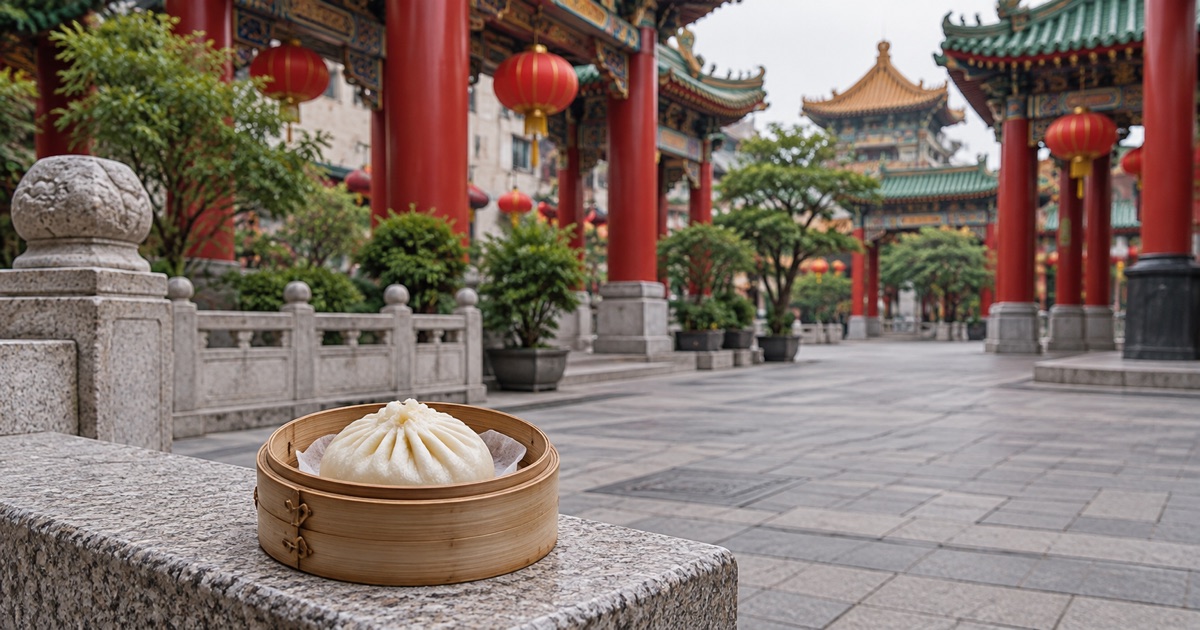
Chinatown has several large decorative gates marking its boundaries, and simply walking between them is an activity in itself for younger children, who often enjoy spotting lanterns, statues, and colorful shopfronts. This takes the pressure off parents to find a specific "attraction," since the streetscape itself holds attention.
Try Steamed Buns and Street Snacks
Steamed buns (bāozi-style, sold under various names locally) are widely available from street-facing counters and are easy for small hands to hold and easy for picky eaters to accept, since they are usually mild and familiar in texture. Many stalls also sell small dumplings, skewers, and sweet snacks that work well as portable toddler food.
Sit-Down Meals for Tired Legs
When kids need a proper sit-down break, Chinatown has a very large number of restaurants, many offering set lunch menus. Few places advertise official "kids' menus," so look for simple noodle or rice dishes that you can easily share or adapt. Portion sizes in set lunches are often generous enough to split between a parent and a small child.
Extend the Day at Yamashita Park
Yamashita Park (山下公園), a short walk from Chinatown's seaside edge, offers open lawn space, sea views, and room for children to run after a period of walking on crowded streets. This is a practical spot to decompress before heading back to the station, and it also makes a natural stroller-break point.
Practical Tips for Parents
Toilets and Baby Facilities
Public toilets inside the dense core of Chinatown are limited, and not all are stroller-accessible. It is generally easier to use facilities at Motomachi-Chukagai Station or at larger complexes near Yamashita Park before and after your Chinatown walk, rather than searching mid-visit.
Stroller Strategy
Main streets in Chinatown are generally walkable with a stroller, but weekend crowds can make maneuvering difficult, and some narrower side streets are not practical for a full-size stroller. A compact, lightweight umbrella stroller is easier to manage than a large travel system here.
Nap Timing
Because train travel time to Yokohama is short to moderate, many parents time the outbound trip to coincide with a toddler's morning nap, arriving refreshed for lunch. Planning the return trip around a second nap window can also help avoid a meltdown on a crowded train platform.
Common Mistakes to Avoid
A few recurring mistakes trip up first-time visitors. Arriving at peak weekend lunchtime without a restaurant plan often means long waits outside popular spots. Assuming every restaurant has English menus is optimistic; some do, many do not, so it helps to have a translation app ready. Finally, underestimating walking distances between the station, Chinatown's core, and Yamashita Park can tire out small legs faster than expected—bringing a stroller even for children who normally prefer walking is a reasonable backup plan.
Sample Half-Day Flow
Morning to Early Afternoon Plan
A simple, flexible structure many families use: depart Tokyo in the late morning, arrive in time for an early lunch before the busiest crowd window, spend an hour or two wandering the main streets and sampling snacks, then walk to Yamashita Park for open space and a rest before heading back. This keeps total walking distance moderate and avoids the most crowded mid-afternoon hours.
When to Build in Buffer Time
Because train schedules and walking pace with children are unpredictable, it is wise to build in extra buffer time rather than planning a tight connection back to central Tokyo, particularly if you are also managing nap schedules or a stroller on busy platforms.
Before You Go
Opening hours, restaurant availability, and train schedules can change, so it is worth checking current details shortly before your visit rather than relying on older information. For broader trip planning and official travel updates, the Japan National Tourism Organization is a reliable starting point alongside your train operator's own website.
FAQ
- Q. Is Yokohama Chinatown stroller-friendly?
- A. Mostly yes on main streets, but some side alleys are narrow and crowded, especially on weekends, so a compact umbrella stroller works best.
- Q. How much time should we budget for Yokohama Chinatown with kids?
- A. Roughly 3 to 4 hours is enough for a relaxed visit including a meal, snacks, and a stop at Yamashita Park, without rushing young children.
- Q. Are there baby-friendly facilities nearby?
- A. Yokohama Station and Minato Mirai area have nursing rooms and larger multi-purpose toilets; Chinatown itself has fewer dedicated baby facilities.
Cite or share this article
Copy the link below. If you quote this article, please link to this page as the source.