Atami Kids Menu Guide: Family-Friendly Dining in Atami
Key takeaways
- Look for okosama ranchi (kids meal plates) at station buildings and family-style diners across Atami.
- Atami Station shopping arcades and the connected mall offer the easiest stroller-accessible meals with child seating.
- Major family restaurant chains near the coastal highway provide English touch-screens and dependable allergy labels.
Finding an Atami kids menu is straightforward once you know where to look, with family restaurants, shopping mall eateries, and casual seaside diners widely serving dedicated children's meal sets known as okosama ranchi (お子様ランチ). For families visiting this coastal onsen town, the most reliable dining options with high chairs, stroller space, and child-approved meals cluster around Atami Station (熱海駅) and along the main beach boulevard.
This seaside hot spring getaway sits less than an hour from Tokyo via the Tokaido Shinkansen, operated by JR Central. While Atami is famous for fresh seafood and steaming hot spring waters, navigating mealtimes with toddlers and young children requires a practical plan. Here is everything you need to know about dining in Atami with kids, decoding Japanese children's menus, and keeping picky eaters happy.
Decoding the Japanese Kids Menu: What to Expect
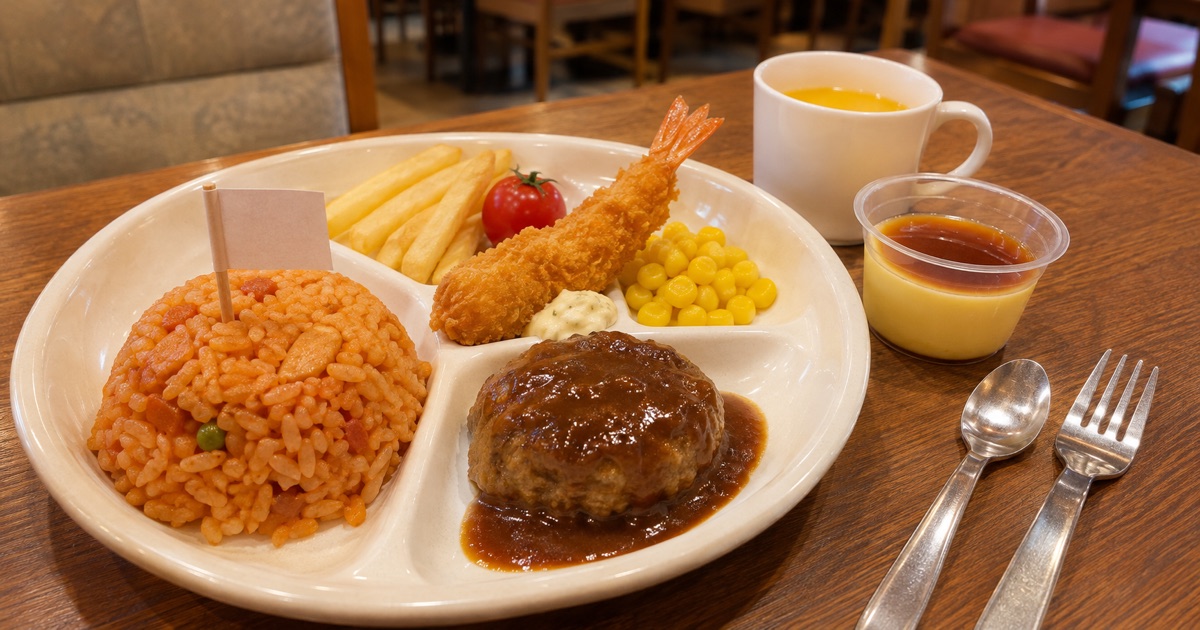
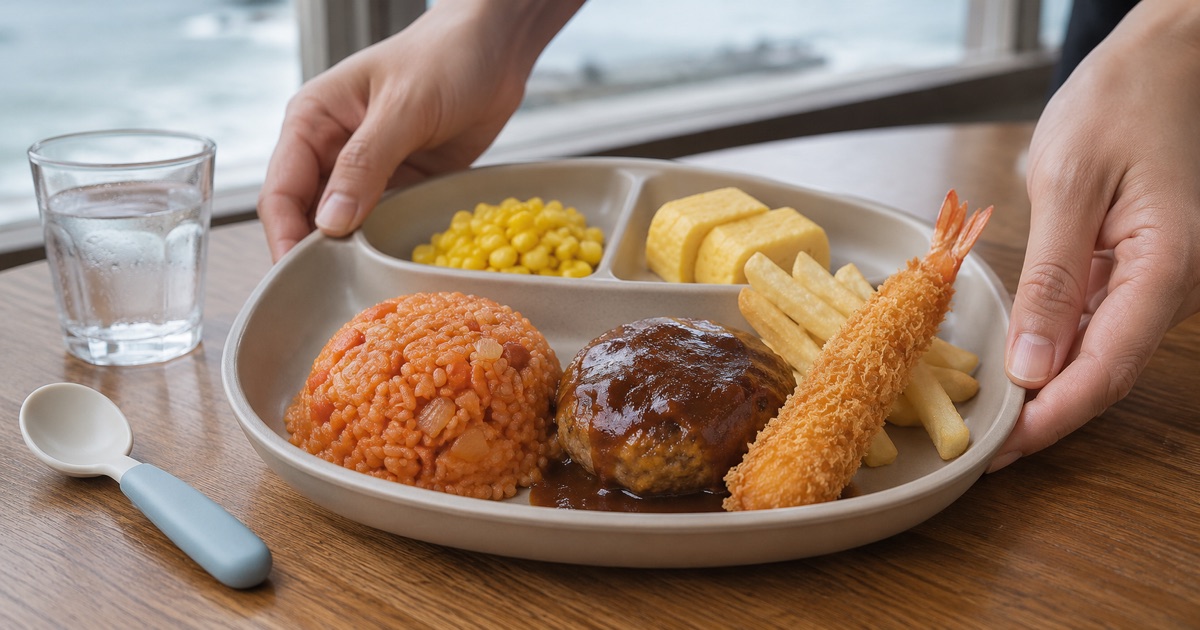
When dining out in Japan, children's meals are rarely just a scaled-down hamburger. Most casual restaurants feature a special combo known as an okosama ranchi or okosama setto (お子様セット). These meals are designed specifically for children of elementary school age and younger, usually presented on colorful partitioned plates, car-shaped trays, or bullet train platters.
A typical kids menu in Atami features a balance of mild, child-friendly Japanese and Western-style comfort foods:
- Carbohydrates: Ketchup-seasoned fried rice (chikin raisu), small triangles of onigiri (rice balls), or a bowl of mild udon noodles in clear broth.
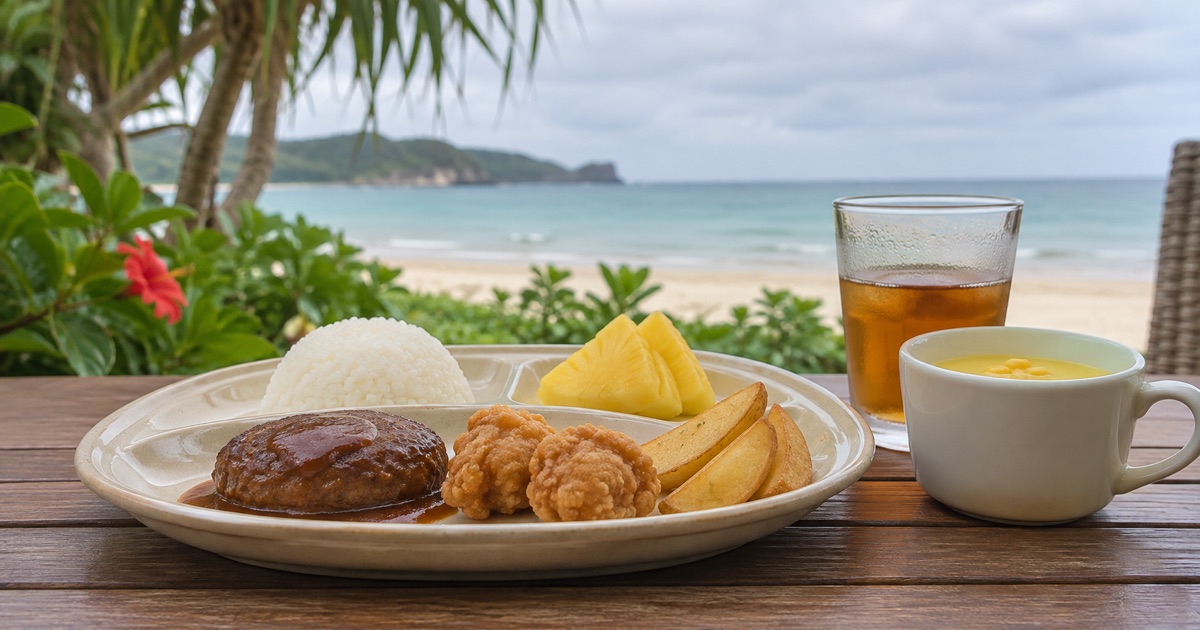
- Proteins: A mini Japanese hamburger patty (hambagu) topped with a sweet demi-glace sauce, fried chicken nuggets (karaage), or fried panko-crusted prawns (ebi furai).
- Sides: French fries, sweet corn, a rolled sweet omelet (tamagoyaki), and a small pot of fruit jelly or pudding.
- Perks: Most sets come with a small paper cup for the restaurant's self-serve drink bar and a token or basket from which the child can choose a small toy (omocha).
Prices for an okosama plate generally range from roughly 500 yen to 1,000 yen. If you have an older child who has outgrown toddler portions, ordering two side dishes or a regular adult donburi (rice bowl) split into smaller bowls is often a better fit.
Where to Find Kids Menus in Atami
Dining options in Atami vary widely, from tiny tatami-mat seafood spots on steep alleys to modern multi-level shopping centers. For stress-free meals with children, target these key areas.
1. Lasca Atami: Direct Station Access
The most convenient place to feed hungry children immediately after stepping off the train is Lasca Atami (ラスカ熱海), the commercial complex integrated directly into Atami Station. The upper floors house a variety of sit-down restaurants that cater heavily to traveling families.
Here, you will find family-friendly soba, udon, and casual seafood restaurants featuring picture menus at the entrance. Most venues here display plastic food replicas (shokuhin sampuru) in glass display cases outside, allowing your child to simply point at what looks appetizing. Several restaurants inside Lasca offer dedicated kids udon sets and mini chicken cutlet bowls.
- Stroller factor: Excellent. The building has wide elevators, accessible multi-purpose restrooms, and diaper-changing tables on multiple floors.
- Best for: Lunch upon arrival, early dinners before catching the bullet train back, and rainy days.
2. Atami Ginza and Nakamise Shopping Streets
Stepping outside the station, you will find two bustling covered shopping arcades: Nakamise Shopping Street (仲見世商店街) and Heiwa Dori (平和通り商店街). Further down the hill toward the water lies the historic Atami Ginza (熱海銀座).
These streets are packed with street food stalls selling fish cakes on sticks, steamed onsen buns (onsen manju), and fruit parfaits. While delightful for a snack crawl, sit-down restaurants here are often compact, with narrow doorways and counter-only seating that cannot accommodate strollers.
If your children can manage sitting at a booth or regular table, look for shokudo (casual, old-school Japanese diners). These diners often lack a formal "kids menu" printed on the page, but they happily prepare simple dishes such as:
- Plain white rice (shiro gohan)
- Plain hot udon noodles (kake udon)
- Mild Japanese curry rice
- Dashi-rolled egg (dashimaki tamago)
3. Seaside Family Restaurants Along Route 135
If you walk down toward the shoreline near Atami Sun Beach (熱海サンビーチ), you will find spacious family restaurant chains (famiresu) along the coastal road. Brands such as Gusto (ガスト) and Jonathan's (ジョナサン) are lifesavers for international parents traveling in Japan.
These chain restaurants offer:
- Dedicated children's menus with extensive allergen charts (often featuring major allergens like eggs, dairy, and wheat clearly marked with universal icons).
- Digital touch-screen ordering tablets that easily switch into English.
- Self-service drink bars featuring juices, water, and milk options.
- Generous table booths, high chairs with clip straps, and dedicated stroller parking areas near the entrance.
Prices at family restaurants are very affordable, with kids meals commonly priced around 400 to 700 yen, making them an easy, low-stress fallback after a long afternoon on the sand.

We are working to carry Japanese craft and everyday culture beyond Japan, by building Japan Towns with local partners.
Read the Japan Town plan →Practical Strategies for Picky Eaters
If your child is hesitant about unfamiliar textures or raw fish, Atami's heavy emphasis on seafood does not have to be a stumbling block.
The Depachika and Konbini Safety Net
If restaurant wait times are too long or a toddler meltdown looms, head to the basement and ground levels of Lasca Atami. You will find high-end bakeries, bento shops, and fresh produce stands. You can assemble a complete, nutritious picnic with sliced fresh fruit, plain salted rice balls (shio musubi), grilled chicken skewers (yakitori), and plain bread rolls.
Convenience stores (konbini) like 7-Eleven, Lawson, and FamilyMart are also dotted throughout Atami, stocking fresh milk, steamed meat buns (nikuman), and kid-friendly snacks around the clock.
Useful Japanese Phrases for Ordering
Keep these practical phrases saved on your phone to show waitstaff when ordering for your children:
- "Do you have a kids menu?"
Okosama menyu wa arimasu ka? (お子様メニューはありますか?)
- "Could you provide a small bowl and spoon?"
Kodomo-yo no torizara to supun o kudasai. (子供用の取り皿とスプーンをください。)
- "Without wasabi, please." (Essential when ordering sushi or fish bowls)
Sabi-nuki de onegai shimasu. (サビ抜きでお願いします。)
- "Could you cut this into small pieces?"
Chiisaku kitte moraemasu ka? (小さく切ってもらえますか?)
Navigating Logistics: Strollers, Hills, and Timing
Atami is built into steep volcanic hills that slope sharply down to Sagami Bay. Planning mealtimes around the town's geography will save your arms and your patience.
Navigating the Incline
The walk from Atami Station down to Sun Beach takes roughly 15 to 20 minutes on foot, but returning involves a very steep uphill climb. Pushing a stroller up these hills after a heavy lunch is exhausting. Plan to take a local bus from the central beach stops back up to the station, or catch a short taxi ride (usually costing around 800 to 1,200 yen depending on traffic).
Dining Hours and Crowds
Weekend crowds in Atami can be intense, as Tokyo residents flock to the area for quick getaways. Popular lunch venues fill up quickly between 11:30 AM and 1:30 PM. To avoid long waits that test a toddler's patience:
- Aim for an early lunch around 11:00 AM, right when restaurants open their doors.
- For dinner, note that many independent cafes and casual shops in the covered arcades close relatively early, often winding down around 5:00 PM or 6:00 PM. If you are not dining at your ryokan, scout and reserve your evening meal spot by mid-afternoon.
For broader regional train connections and journey planning to Shizuoka Prefecture, consult the Japan National Tourism Organization trip-planning resources before setting out. Always double-check current restaurant opening schedules online, as family-run shops in onsen communities frequently adjust their rest days.
FAQ
- Q. Do traditional seafood restaurants in Atami offer kids menus?
- A. Many traditional izakaya or small sashimi counters do not offer specific kids menus, but they usually serve plain rice, tamagoyaki, and udon noodles.
- Q. How much does a typical kids meal cost in Atami?
- A. An okosama lunch plate in Atami generally costs between 500 yen and 1,000 yen, often including a drink or small toy.
- Q. Are restaurants in Atami stroller friendly?
- A. Station buildings and large seaside diners have elevator access and wide aisles, while retro shopping street eateries often require folding your stroller outside.
Cite or share this article
Copy the link below. If you quote this article, please link to this page as the source.