Nikko with Kids by Car: Complete Family Driving Guide
Key takeaways
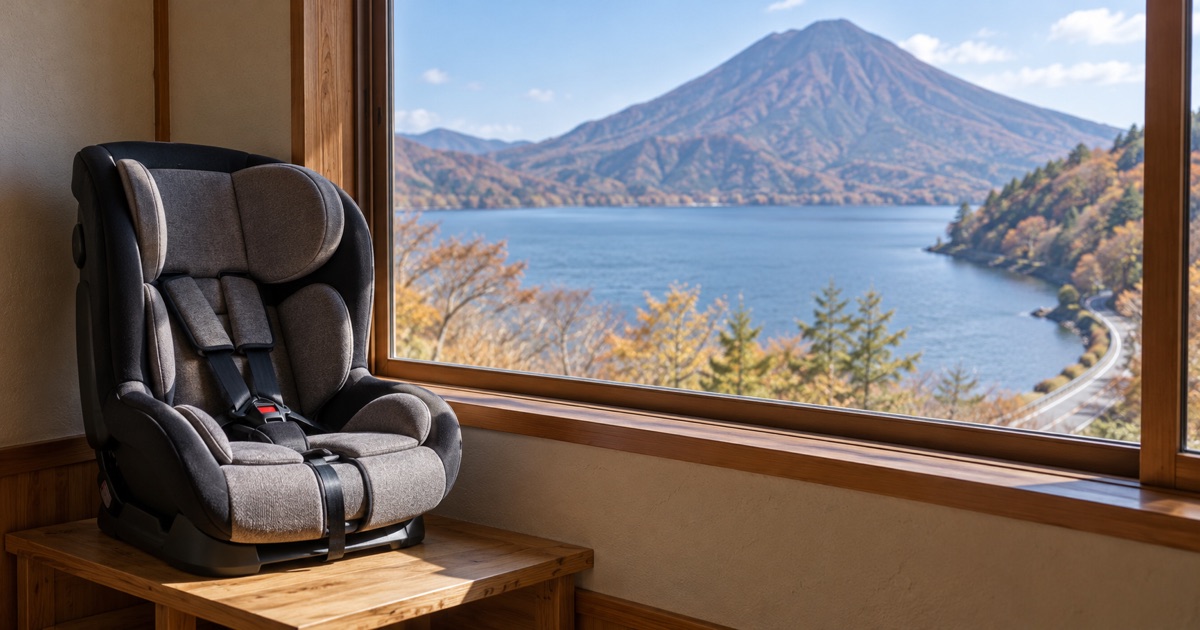
- Book child car seats in advance; Japanese law strictly requires them for all kids under six years old.
- Pick up your rental car near Nikko Station to avoid navigating Tokyo's dense expressway traffic with restless kids.
- The 48 hairpin turns of Irohazaka require car-sickness prep, and Toshogu Shrine requires a baby carrier over a stroller.
Renting a car to explore Nikko with kids is one of the easiest ways to travel at your family's own pace, especially if you want to visit Lake Chuzenji and the waterfalls without waiting for crowded buses. Driving allows you to manage toddler naps, pack extra snacks and stroller gear, and avoid steep bus queues, though winding mountain roads and winter conditions require careful preparation.
Nikko (日光), located in Tochigi Prefecture roughly two to two-and-a-half hours north of central Tokyo, offers a dramatic mix of ancient world-heritage shrines, highland lakes, and rushing waterfalls. While the train from Tokyo to Nikko is famous and convenient, relying solely on local buses with young children, fold-up strollers, and diaper bags can be exhausting during peak hours. Exploring Nikko by car gives your family complete control over your schedule.
Renting a Car: Tokyo vs. Nikko Station
One of the first decisions parents face is where to pick up the rental car. You have two practical approaches:
Option 1: Rent Near Nikko Station (Recommended for Families)
Taking a train from Tokyo to Nikko and picking up your rental car near the station is the least stressful option for most international families. You can ride the comfortable Tobu Railway Spacia limited express from Asakusa or take a JR bullet train to Utsunomiya (宇都宮) and connect to the local JR Nikko Line. For train schedules and travel planning, check JR East.
Once you arrive at Tobu-Nikko Station (東武日光駅) or JR Nikko Station, you can walk to nearby rental car branches like Toyota Rent-a-Car or Nippon Rent-A-Car.
- Pros: Skips Tokyo's intense expressway interchanges, lets kids stretch out on the train, and keeps driving time down to just local touring.
- Cons: You will need to haul your luggage onto the train from Tokyo.
Option 2: Drive Directly from Tokyo
If you have multiple small children, lots of heavy bags, or a sleeping baby, renting a car in Tokyo and driving straight up the Tohoku Expressway (東北自動車道) to the Nikko-Utsunomiya Road eliminates all train transfers.
- Pros: Door-to-door convenience; pack the trunk once at your Tokyo hotel and you are done.
- Cons: Tokyo expressway traffic can be intimidating for first-time visitors, and morning or evening rush hours can easily add one to two hours to your journey. Tolls will also add several thousand yen each way.
Car Seats and the Law in Japan
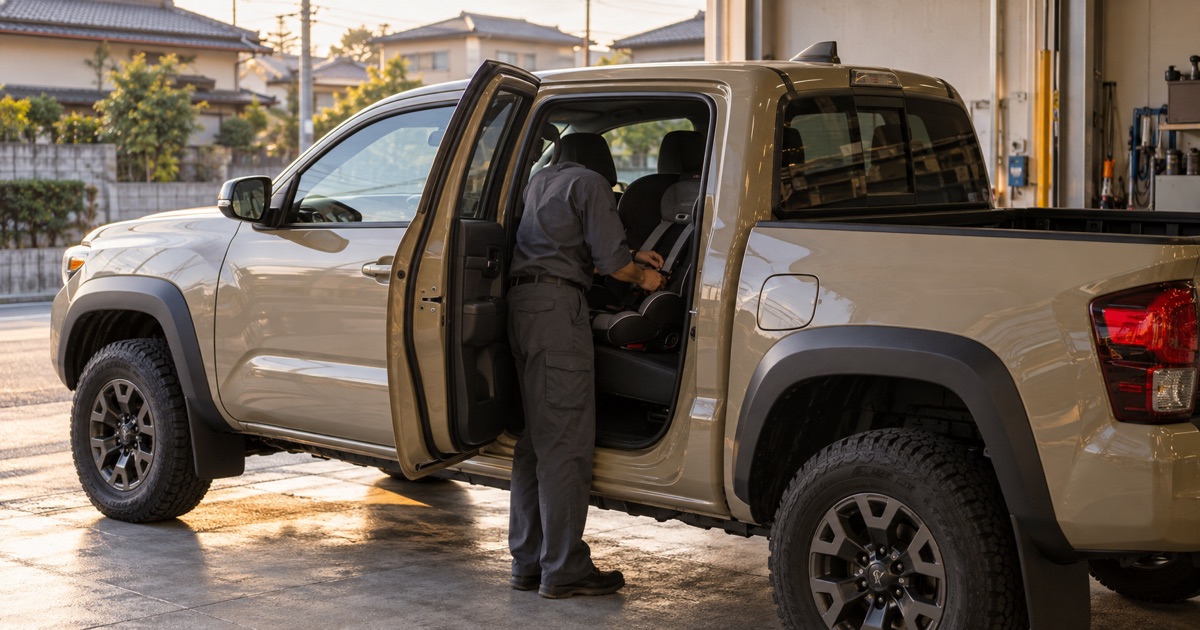
Child safety seats are strictly mandatory in Japan for all children under the age of six. Rental agencies will refuse to release the vehicle if you do not have appropriate seats booked for every child in that age bracket.
Expat Community Consensus vs. Official Rules
Online travel forums and social media groups often debate how strictly Japanese traffic police enforce car seat laws, especially with booster seats for older five-year-olds or short hops between shrine parking lots.
Here is the vital distinction:
- Official Regulation: Japanese Road Traffic Law explicitly mandates a certified child seat for every child under six years old without exception. Rental car agencies adhere strictly to this rule and inspect seat installation before handing over keys.
- Expat/Traveler Consensus: Many seasoned parents recommend using a high-back booster seat or harness seat even beyond age six if your child is under 135 cm (4 feet 5 inches), because standard vehicle seatbelts can ride dangerously across a child's neck.
When you book your car online, reserve child seats (チャイルドシート, chairudo shiito) or junior booster cushions (ジュニアシート, junia shiito) well in advance. Inventory at smaller regional branches can sell out during Japanese school holidays. Always double-check the installation yourself before leaving the rental lot.
We are working to carry Japanese craft and everyday culture beyond Japan, by building Japan Towns with local partners.
Read the Japan Town plan →Driving the Irohazaka Slopes with Motion-Sick Kids
Nikko is divided into two distinct zones: the lower World Heritage area (Toshogu Shrine) and the upper highland area (Lake Chuzenji and Oku-Nikko). Connecting them is the famous Irohazaka Slope (いろは坂)—a pair of one-way mountain passes featuring 48 hairpin turns.
The uphill road (Second Irohazaka) climbs dramatically through the mountains. While it is fully paved, wide, and well-maintained, the sheer number of tight turns can easily trigger car sickness in toddlers and young children.
Practical parent tips for surviving Irohazaka:
- Dose motion-sickness medicine early: If your children are prone to nausea, give them kid-safe motion sickness remedies (toraberumin or similar) about 30 to 45 minutes before starting the climb.
- Crack the windows: Fresh mountain air often helps settling an upset stomach better than car air conditioning.
- Akechidaira Plateau Stop: Near the top of the climb, you will see the parking area for the Akechidaira Ropeway (明智平ロープウェイ). It makes a good place to pull over, let little legs run around, and use the restrooms. Check locally or at visitor centers for operating status, as ropeway hours vary with weather and wind.
Parking, Strollers, and Walking Routes
Driving saves your feet on the highway, but once you arrive at Nikko's sights, you will still do plenty of walking.
Toshogu Shrine (日光東照宮)
The lower temple complex has large paid parking areas. The closest lot is the Toshogu Treasure Hall parking area.
- Stroller Reality: Nikko Toshogu is built on a steep, rocky forest hillside. It features long gravel pathways, mossy stone slopes, and hundreds of tall, uneven stone stairs. Standard strollers are completely impractical inside the shrine gate.
- Parent Strategy: Leave your stroller in the car trunk and carry a soft baby carrier or sling. If you have a toddler, expect to hold their hand or carry them up the staircases.
Lake Chuzenji (中禅寺湖) and Kegon Falls (華厳の滝)
Parking around Lake Chuzenji is straightforward, with paid municipal and prefecture lots near the Kegon Falls observation platform and the lakefront.
- Stroller Reality: Much friendlier than the shrines. Kegon Falls has an elevator down to the viewing gorge that can accommodate strollers (though folding it may be required on busy days). The lakeside walking promenade is paved and flat, perfect for letting toddlers push a stroller or walk safely away from traffic.
Senjogahara Marshland (戦場ヶ原)
If you drive further up into Oku-Nikko, you can park at San-an-to parking lots near the marsh. The boardwalk trails are scenic and flat, but wooden walkways often have steps or narrow spans, making a backpack carrier preferable to a stroller.
Rest Stops: Michi-no-Eki for Families
When driving in Japan with kids, roadside service stations known as Michi-no-Eki (道の駅) are lifesavers. Unlike highway toll plazas, these are local, community-run centers offering clean, family-friendly restrooms, baby-changing tables, vending machines, regional fruit, and casual food courts.
Around the Nikko area, look for:
- Michi-no-Eki Nikko (Nikko Kaido Niko-Niko Honjin): Located in central Nikko near Imaichi Station. It offers spacious restrooms, local strawberry ice cream, and plenty of space to let an energetic toddler walk around.
- PA / SA expressway stops: If driving from Tokyo, major Service Areas (SA) like Hasuda SA or Sano SA have dedicated nursing rooms, hot water dispensers for baby formula, and kid-sized toilet stalls.
Seasonal Driving Cautions
Autumn Foliage (Peak Crowds)
From mid-October to early November, the autumn colors in Nikko draw massive crowds from across Japan. The drive up Irohazaka, which normally takes around 20 minutes, can turn into a standstill traffic jam lasting two to three hours.
- Tip: If visiting during peak autumn, start your drive up the mountain before 7:00 AM, or plan your descent early in the afternoon before the evening rush.
Winter Snow and Ice (December to April)
Nikko's highland areas receive significant snowfall, and the mountain passes freeze over.
- Tip: Japanese rental agencies do not automatically include studless winter snow tires unless requested. If you travel between December and early April, you must select snow tires (スタッドレスタイヤ, sutaddoresu taiya) as an add-on. Rental companies charge a modest daily fee for these.
For broad updates on road conditions and regional tourism guidelines, consult the Japan National Tourism Organization.
FAQ
- Q. Can I use an international stroller at Nikko Toshogu Shrine?
- A. No, standard strollers are very difficult to use inside Toshogu due to uneven gravel paths and steep, tall stone staircases. It is best to leave your stroller in the car trunk and use a baby carrier or sling.
- Q. Do I need an International Driving Permit (IDP) to rent a car in Japan?
- A. Yes, visitors from most countries must present a physical International Driving Permit issued under the 1949 Geneva Convention alongside their home driver's license and passport. Travelers from a few specific countries (such as Germany, France, and Switzerland) require an official Japanese translation instead.
- Q. Are toll roads expensive when driving to Nikko?
- A. Expressway tolls from central Tokyo to Nikko generally cost between 3,500 and 5,500 yen each way depending on your route. Ask your rental car company for an ETC (Electronic Toll Collection) card to pass smoothly through toll gates without needing cash.
Cite or share this article
Copy the link below. If you quote this article, please link to this page as the source.